Brookbanks Webinar: Closing the Loop – Rethinking Sustainable Buildings

In this webinar, Katie Glaze and Grant Vasey explore how sustainable design must move beyond traditional RIBA stages to better reflect how buildings actually perform in use. The session focuses on the disconnect between design intent and operational reality, and why long-term performance depends on evolving ownership, real user behaviour, and ongoing feedback. Drawing on practical experience and case studies, Katie and Grant highlight how current tools and assessment methods, including TM54, LCA/WLC and NABERS, often fall short in capturing real-world performance. The webinar is aimed at those working across design, engineering, and development who are looking to better understand operational outcomes and deliver more effective, sustainable buildings.
Understanding the Performance Gap
The webinar begins by exploring the well-established performance gap between how buildings are designed and how they operate in reality. While significant progress has been made in aligning design and construction through modelling and certification schemes, far less attention has been given to what happens once buildings are occupied.
Katie and Grant discuss how existing frameworks often rely heavily on predicted performance, rather than real data, and rarely incorporate meaningful feedback from occupiers or facilities teams. They highlight the need to extend the focus beyond completion, using operational insights to inform future projects and close the loop between design and use.
The Role of Post-Occupancy Evaluation
A key theme throughout the session is the importance of post-occupancy evaluation (POE) as a tool to better understand how buildings perform over time. The speakers reflect on why POE has historically seen limited uptake, despite being widely recognised as valuable.
They explore how structured evaluations — including data analysis, site inspections, and occupant feedback — can uncover inefficiencies, identify faults, and highlight opportunities for improvement. The discussion also touches on industry barriers, including perceived liability risks and lack of enforcement, which have limited wider adoption.

Economic, Social and Environmental Value
The webinar explores the benefits of post-occupancy evaluation across the three pillars of sustainability, demonstrating how improved operational performance can deliver measurable value. From reducing energy costs and extending asset lifespan to enhancing overall building value, the session highlights the importance of identifying inefficiencies early to avoid costly issues later.
The speakers also emphasise the growing importance of occupant wellbeing, with factors such as air quality, thermal comfort and acoustics playing a key role in health, productivity and user satisfaction. Alongside this, optimising performance using real data can reduce energy consumption and carbon emissions, while informing more sustainable refurbishment decisions and minimising embodied carbon.
Learning from Real Projects
Through a series of case studies, the webinar demonstrates how post-occupancy insights can lead to practical and often simple improvements. These range from resolving thermal comfort issues and correcting commissioning faults to rethinking how space is used to better meet occupant needs.
The session highlights how data-driven decisions can avoid unnecessary relocation, reduce costs, and improve energy performance. It concludes by reinforcing the importance of feeding operational insights back into design, enabling organisations to refine standards, avoid repeating issues, and continuously improve building performance over time.
Want to Learn More?
If you’re looking to understand how buildings truly perform over time — and how to design with that reality in mind — watch the full webinar back now.
Plus don’t forget to subscribe to our YouTube channel to keep up to date with industry updates and key insights.

Director, Mechanical and Electrical Engineering Group
Grant Vasey
Read Profile
Sustainability Director
Katie Glaze
Read ProfileMore News
Podcast #18: Design of Transfer slabs and efficient structures
June 2, 2026
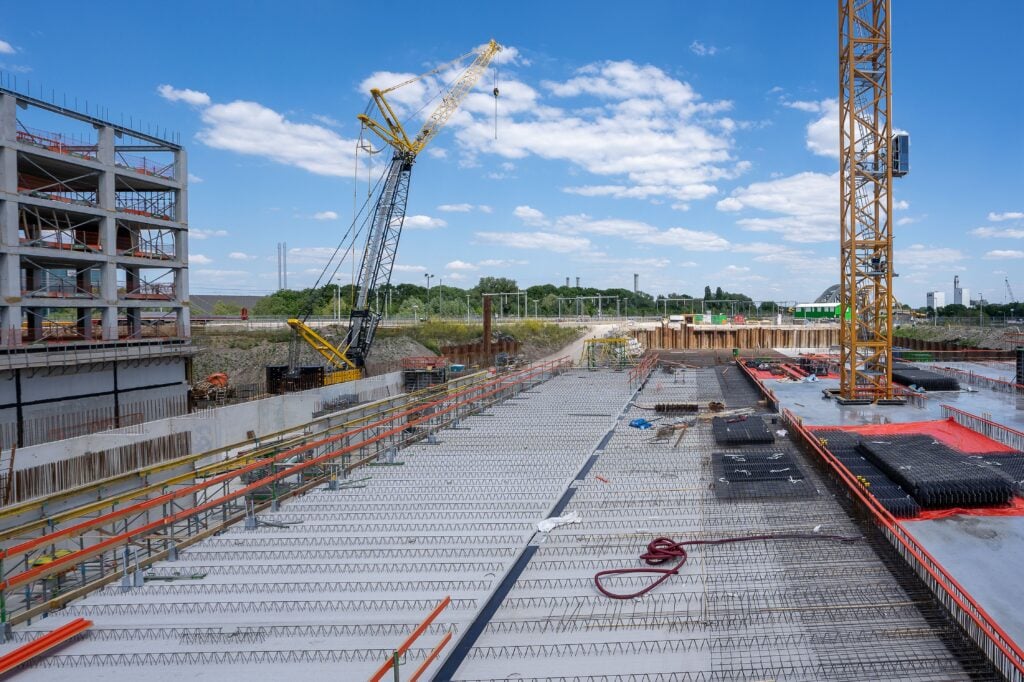
As development sites become more constrained and expectations around multi-use building designs continue to rise, structural engineering choices are playing an increasingly important role in successful delivery. In our latest podcast, “Design of Transfer slabs and efficient structures,” Ben is joined by Chris Vivian and Devi Varatharajan to explore current industry trends in concrete design. The discussion focuses on how transfer slabs impact construction efficiency, carbon footprints, and why early-stage engagement is critical to optimizing building design.
Delivering Education Infrastructure: Direct Delivery or Section 106 Contributions?
May 22, 2026
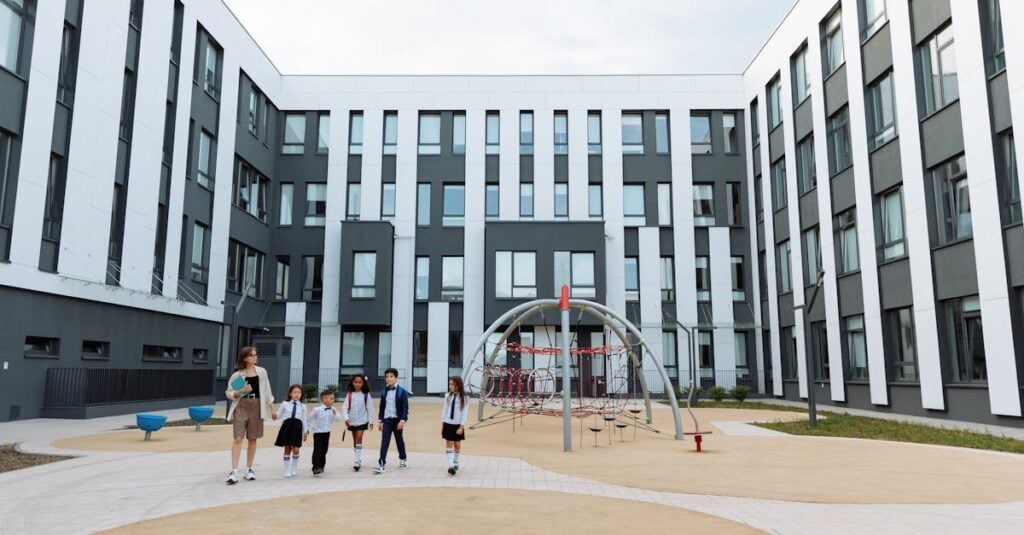
Education facilities play a vital role in shaping successful residential communities. Alongside providing essential school places for growing populations, they help create well-connected neighbourhoods, support long-term community wellbeing and contribute positively to placemaking outcomes. For developers bringing forward significant housing schemes, deciding how education infrastructure obligations should be delivered is rarely straightforward. In most cases, this involves either directly delivering a new education facility as part of the development, or making a financial contribution through a Section 106 Agreement to support provision elsewhere. Each approach carries implications for cost, programme, planning strategy and the long-term success of the development.