Skip to content

The development landscape continues to evolve. Planning policy, infrastructure requirements, utility capacity, environmental obligations and market conditions are all influencing how residential schemes are assessed, planned and delivered. Against this backdrop, the Home Builders Federation's latest SME Developer Sentiment Survey highlights development viability as an increasingly important area of focus for SME housebuilders. For a sector that plays a critical role in delivering much-needed housing across the UK, the findings provide a valuable snapshot of the factors influencing investment decisions, land acquisition strategies and project delivery.

The HBF’s research suggests viability is becoming a more prominent consideration throughout the lifecycle of a development. Land acquisition decisions, site appraisals and delivery strategies are increasingly informed by a wider understanding of the planning, technical and commercial factors that influence project performance.

Planning permission remains a significant milestone, but successful delivery is supported by a clear understanding of the wider considerations that shape a scheme. Infrastructure requirements, utility capacity, drainage strategies, environmental commitments and market conditions all contribute to how developments are designed, programmed and brought forward.

For developers, this creates an opportunity to take a more integrated view of project viability from the outset.

Understanding how planning, engineering, environmental and commercial considerations interact provides greater clarity when evaluating opportunities, establishing delivery strategies and making key investment decisions. Bringing these elements together can help create a stronger understanding of project performance throughout the development lifecycle, from acquisition and planning through to construction and completion.

As viability becomes an increasingly important consideration across the sector, many developers are placing greater emphasis on early collaboration between technical, planning and commercial specialists.

A coordinated approach allows opportunities to be explored from multiple perspectives, ensuring important decisions are supported by a comprehensive understanding of the factors influencing delivery. Infrastructure strategies can be reviewed alongside site layouts, utility requirements considered alongside phasing programmes, and environmental considerations incorporated into wider development objectives.

This joined-up thinking helps project teams develop well-informed strategies that align commercial objectives with planning and technical requirements. It also creates opportunities to optimise infrastructure solutions, refine engineering designs, enhance site layouts and improve the overall efficiency of project delivery.

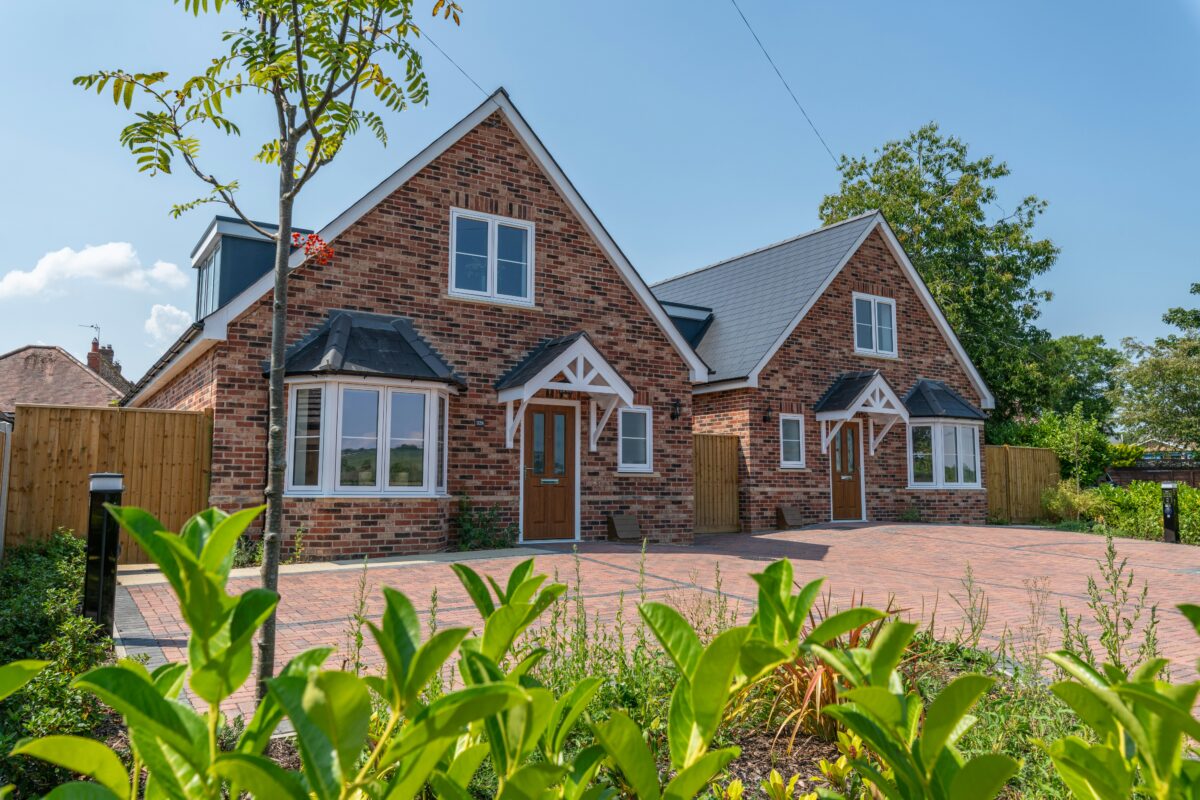
Two pale cream coloured dethatched houses, with grey roofs. Built by SME developers in the UK under the guidance of Brookbanks.

Regular viability reviews are also becoming an increasingly valuable part of the development process. Planning requirements, infrastructure expectations, market conditions and delivery programmes naturally evolve as projects progress. Reviewing viability at key stages helps ensure development strategies continue to reflect the latest information available and remain aligned with project objectives.

Importantly, viability extends beyond financial modelling alone. Planning, environmental, infrastructure and engineering considerations all contribute to development performance and play an important role in shaping commercial outcomes. Bringing these factors together provides developers, funders and landowners with a more complete understanding of a scheme and supports confident decision-making throughout the project lifecycle.

The opportunities for SME housebuilders remain significant. Demand for new homes continues, and developers who combine strong commercial insight with a detailed understanding of planning, infrastructure, engineering and environmental considerations are well placed to bring forward successful schemes.

As the market continues to evolve, a comprehensive understanding of viability provides a strong foundation for informed decision-making and successful project delivery. By bringing together specialist expertise and maintaining a clear view of the factors influencing development, project teams can create strategies that support delivery, maximise value and build confidence at every stage of the development journey.

At Brookbanks, we see first-hand the value that integrated thinking brings to residential developments. By combining expertise across Planning, Environmental Services, Engineering & Design, Project Delivery & Management, Cost & Commercial Guidance and Development Partner services, we help clients develop a clear understanding of their projects and create strategies that support successful outcomes from acquisition through to completion.

More News

Transfer Slabs Under the Spotlight

June 19, 2026

Transfer slabs are a key component in complex structural design, and evolving regulatory expectations are strengthening how their performance is understood and demonstrated. This article shares our perspective on the Building Safety Regulator’s focus on transfer slabs, outlining what it means for new and existing buildings, and highlighting the value of clear, evidence-led design and proportionate engineering judgement.

Read More
A historic building under restoration, covered in scaffolding and protective nets.

Brookbanks Podcast #19: Life Cycle & Upfront Costs

June 18, 2026

As the long-term sustainability and operational efficiency of developments come under greater scrutiny, the balance between initial capital outlay and long-term expenditure is playing an increasingly important role in successful project delivery. In our latest podcast, “Life Cycle & Upfront Costs,” Ben Wakeling is joined by Gerrad Mukuyu to explore how these two critical aspects of project budgeting interact in practice. The discussion focuses on why evaluating a project's financial footprint over its entire lifespan rather than just its construction phase can improve scheme viability, reduce risk, and ultimately create more sustainable, cost-effective assets.

Read More
Stunning landscape featuring solar panels and wind turbines at sunrise, symbolizing sustainable energy.

Brookbanks Webinar: Unlocking Grid Capacity with LEMA

June 17, 2026

In this webinar we explore how grid constraints are increasingly affecting development and how smart local energy systems could help unlock capacity and accelerate delivery. Hosted by Matthew Capper, with guest Ed Hurford from the Local Energy Markets Alliance (LEMA), the session takes a conversational look at the challenges facing the electricity network and introduces an emerging, market‑based solution designed to address them. The discussion is particularly relevant to those working across planning, utilities and development who are dealing with delays, costs and uncertainty associated with grid connections on new and existing schemes.

Read More