
Delivering Education Infrastructure: Direct Delivery or Section 106 Contributions?

Education facilities play a vital role in shaping successful residential communities. Alongside providing essential school places for growing populations, they help create well-connected neighbourhoods, support long-term community wellbeing and contribute positively to placemaking outcomes. For developers bringing forward significant housing schemes, deciding how education infrastructure obligations should be delivered is rarely straightforward. In most cases, this involves either directly delivering a new education facility as part of the development, or making a financial contribution through a Section 106 Agreement to support provision elsewhere. Each approach carries implications for cost, programme, planning strategy and the long-term success of the development.
Understanding the Obligation: Why Education?
Under the National Planning Policy Framework (NPPF), local planning authorities (LPAs) are required to plan proactively for infrastructure that supports growth. Education is consistently one of the most significant infrastructure requirements associated with large-scale residential allocations, urban extensions and New Town proposals.
As new residential communities grow, there is a corresponding need to ensure appropriate education provision is delivered alongside them. The key consideration is how that need is best met in the context of the wider development strategy.
The Two Routes
Route A: Direct Delivery of an Education Facility
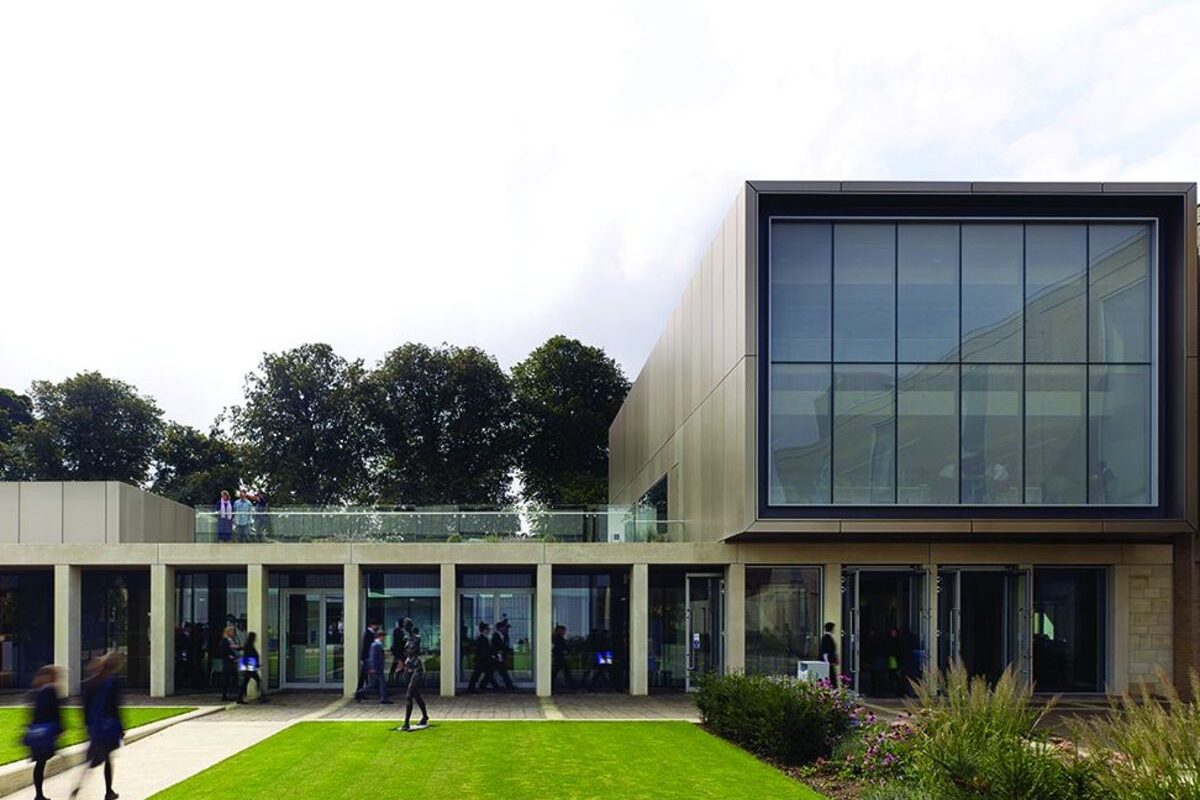
Direct delivery involves the construction and handover of a new school or educational building as part of the development. This is typically a primary school and, depending on the scale of the development and identified need, may also include a secondary school, playing pitches and associated infrastructure. The obligation is agreed through the Section 106 Agreement, with delivery typically tied to a defined programme linked to occupation triggers.
Once completed, the facility is typically transferred to the Local Education Authority or County Council at nil or nominal consideration, with responsibility for operation, staffing and ongoing maintenance passing to the relevant authority.
Route B: Financial Contribution via Section 106
The alternative approach is a financial contribution paid to the local authority or County Council. The authority then uses those funds to deliver additional school places, either through the expansion of existing schools or the procurement of new facilities through its own programme.
The level of contribution is typically informed by the Education Authority’s Education Needs Assessment, applying a per-pupil cost rate against the anticipated pupil yield generated by the development.
Direct Delivery – Pros and Cons
| Advantages of Direct Delivery | Risks and Disadvantages |
| Greater control over design quality, specification and programme | Significant upfront capital commitment and cash flow implications |
| Potentially more cost-effective if construction procurement is well-managed | Planning obligations may impose tight programme triggers |
| Can be phased into the development programme to align with occupation triggers | Risk of delay if Education Authority/County Council procures operator late in the process |
| A completed school on-site makes a new residential development more desirable for new homeowners | |
| Demonstrates community benefit |
The Cost Case for Direct Delivery
On larger allocations, typically 500 dwellings or more where a full school solution is justified, direct delivery can often provide better value when compared with a financial contribution approach. Where procurement is managed efficiently and delivery is integrated into the wider construction programme, there can be opportunities to reduce overall costs through shared infrastructure, utilities and site mobilisation.
In our experience, developments that benefit from established contractor relationships or integrated delivery strategies are often better placed to realise these efficiencies while maintaining programme certainty and quality outcomes.
Marketability and Placemaking
A well-designed school delivered early in the development programme can demonstrate a long-term commitment to the community, support the vision of a well-served neighbourhood and help address concerns around future school place availability.
From a placemaking perspective, education facilities can also act as focal points within new communities. Where the development strategy supports it, integrating education provision alongside community or health uses can help create a more connected and sustainable neighbourhood environment.
Section 106 Financial Contributions – Pros and Cons
| Advantages of S106 Contributions | Risks and Disadvantages |
| Cost certainty from the outset – the obligation is fixed and quantifiable | No control over how or when the County Council/Education Authority deploys the funds |
| Simpler to negotiate and document within the s106 Agreement | Contribution quantum may be benchmarked to higher rates |
| No construction risk or programme dependency for the developer | No direct planning or marketing benefit from the obligation |
| Cash flow can be managed through phased trigger payments | Education Authority-managed delivery may result in a school opening at a time that is less predictable |
| No ongoing liability once the contribution is paid | Risk that funds are pooled and do not deliver places in proximity to the site |
| Unused Section 106 payments can be recovered if “clawback mechanisms” are included in the agreement |
When Financial Contributions Make Sense
For smaller sites, particularly those generating fewer than 150 to 200 primary school places, the delivery of a standalone school is rarely practical. In these circumstances, the Education Authority will typically seek a financial contribution to support the expansion of existing local schools.
Financial contributions may also be more appropriate where there are genuine site constraints that limit the ability to accommodate a school, such as insufficient land availability, topography, flood risk or contamination issues.
In our experience, early review of the likely contribution quantum, payment triggers and expenditure timeframes can help ensure obligations remain proportionate and aligned with the overall viability and programme of the development.

Key Planning Considerations
The Role of the Infrastructure Delivery Plan and Local Plan Policy
Before entering into negotiations, it is important to review the adopted Local Plan and associated Infrastructure Delivery Plan. These documents will often identify whether the local authority and Education Authority expect direct delivery or financial contributions, together with any indicative requirements for future school provision.
Where a Local Plan identifies a specific allocation for a school within or adjacent to a development site, this is likely to carry significant weight during Section 106 negotiations. Any proposed departure from this approach will typically require clear justification and agreement with the relevant authorities.
Occupation Triggers and Phasing
Whether education provision is delivered directly or through a financial contribution, the Section 106 Agreement will usually link obligations to occupation triggers. These are commonly tied to defined development milestones, such as the commencement of construction, completion of a school shell or phased occupation led contribution payments.
We regularly support clients in structuring occupation triggers that balance delivery requirements with realistic programme and sales expectations. Well-considered phasing arrangements are essential to ensure infrastructure delivery aligns with anticipated pupil demand and wider development objectives.
The Relationship Between Section 106 and CIL
Where the Community Infrastructure Levy (CIL) is in place, it is important to ensure there is no duplication between CIL-funded infrastructure and Section 106 obligations. If education infrastructure is already identified within the authority’s infrastructure funding framework, it may not also be appropriate as a site-specific Section 106 obligation.
In some circumstances, pooled CIL receipts may provide local authorities with greater flexibility to deliver school places independently, potentially reducing the extent of site-specific obligations.
Viability
Where education obligations impact overall scheme viability, applicants may submit a Financial Viability Appraisal (FVA) to support the review or renegotiation of obligations. National planning guidance is clear that planning obligations should not undermine the deliverability of development proposals, although any assessment must be supported by robust evidence.
We often find that a well-prepared viability assessment, benchmarked appropriately and supported by clear delivery evidence, can provide an important basis for reviewing the proportionality of education obligations.
Our Recommendation
In our experience, direct delivery of education facilities often provides the greatest strategic and placemaking benefits for larger housing allocations, provided the approach is supported by the appropriate expertise, programme management and contractual structure. For smaller sites, a well-structured financial contribution is often the most appropriate and proportionate solution.
Our recommendation can be summarised as follows:
| Development Type | Recommended Approach |
| 500+ dwellings (Strategic Allocation) | Direct delivery – maximise cost efficiency, placemaking benefit and planning credibility |
| Under 200 dwellings | Financial contribution – negotiate on quantum, triggers and expenditure timescales |
| Complex urban sites with constraints | Financial contribution – focus on trigger and indexation terms |
Getting the Negotiation Right
Whichever route is pursued, careful negotiation of the Section 106 obligation is essential to ensure education requirements are proportionate, deliverable and aligned with the wider development strategy.
When advising clients on education infrastructure obligations, we typically focus on areas such as:
- Ensuring pupil yield assessments accurately reflect the proposed dwelling mix
- Reviewing whether additional school places are genuinely required and assessing nearby capacity
- Structuring occupation triggers around realistic programme and sales expectations
- Including appropriate expenditure longstop provisions for financial contributions
- Agreeing school specifications early to avoid unnecessary scope changes at later stages
- Confirming that obligations do not duplicate existing CIL liabilities

Conclusion
The decision between direct delivery and a financial contribution is ultimately a strategic and commercial consideration that requires careful analysis of a development’s scale, programme, masterplan and viability. When approached effectively, direct delivery can support placemaking ambitions, strengthen community infrastructure and enhance the identity of a development. Equally, a well-structured financial contribution can provide a proportionate and efficient route where direct delivery is not appropriate.
At Brookbanks, we support clients through every stage of the education infrastructure planning process, combining expertise across our planning, Project Delivery & Management and Development Partner specialist services. From large strategic allocations to complex urban regeneration schemes, we work collaboratively with clients, local authorities and stakeholders to develop commercially informed, deliverable solutions that support successful developments and long-term community outcomes.

Structural Director
Lee Bowers
Read Profile
Group Director for Development Management / Head of Yorkshire and North East Office
Tori Hall
Read ProfileMore News

Our July 2026 Newsletter
August 17, 2026
This month, we’ve continued to explore many of the key themes currently influencing the built environment, from sustainable drainage and climate resilience through to structural efficiency, site disposal and long-term project performance. A particular highlight from the past month was the publication of our new report, written in conjunction with the Home Builders Federation (HBF), examining Sustainable Drainage Systems and the opportunities we’ve identified in Wales to support greater consistency, certainty and efficiency ahead of guidance becoming legislation across England. This month, we also shared some exciting leadership news as we continue to grow and evolve following our recent partnership with CBPE. Plus, read on to take a look back at our latest thought leadership article covering development viability, as well as three podcast episodes from the past few weeks.