Skip to content

The recent government announcements regarding Nutrient Neutrality and subsequent news coverage may have caught your attention.

It has been reported that an amendment to the Levelling Up and Regeneration Bill (LURB) will be introduced to modify the application of Habitats Regulations, which are integral to the Nutrient Neutrality matter. The amendment is expected to remove the ‘requirement’ on Natural England to advise councils against approving housing projects in areas where protected waterways are at risk of pollution. This shift in development consideration could have a significant impact and unlock sites around the country that were previously affected by this issue.

Legislation amendments are currently under review and require parliamentary approval before receiving Royal Assent.

While these proposed changes have already sparked controversy among environmental groups and the opposition, it is important to note that all development will likely be impacted.

As such, it is likely that you will still be recommended to assess and reduce your impact during the planning stages, as this will remain a key consideration regardless of occupancy allowances. We will continue to monitor this issue as it unfolds and provide updates as necessary…

At Brookbanks, we make it our mission to always stay ahead of the curve and keep our clients in the loop with the latest developments. With that in mind, we want to assure you that we are fully committed to keeping you informed every step of the way.
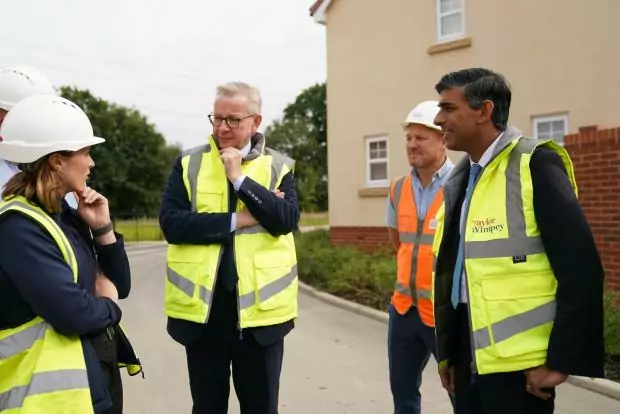
If you have any queries on how this may affect your portfolio, please don’t hesitate to contact our Nutrient Neutrality expert Dean Swann and his team for further advice.

See the announcement here!
Principal Consultant - Hydrology

Alejandro Marcotegui

Read Profile
Dean Swann, Group Technical Director at Brookbanks
Technical Director, Land, Development and Communities Group

Dean Swann

Read Profile
Graduate Environmental Engineer

Paige Fellows

Read Profile
Siobhan McGlynn, Principal Engineer at Brookbanks
Principal Engineer

Siobhán McGlynn

Read Profile

More News

Development Viability: An Increasing Area of Focus for SME Housebuilders

July 10, 2026

The development landscape continues to evolve. Planning policy, infrastructure requirements, utility capacity, environmental obligations and market conditions are all influencing how residential schemes are assessed, planned and delivered. Against this backdrop, the Home Builders Federation's latest SME Developer Sentiment Survey highlights development viability as an increasingly important area of focus for SME housebuilders. For a sector that plays a critical role in delivering much-needed housing across the UK, the findings provide a valuable snapshot of the factors influencing investment decisions, land acquisition strategies and project delivery.

Read More

Transfer Slabs Under the Spotlight

June 19, 2026

Transfer slabs are a key component in complex structural design, and evolving regulatory expectations are strengthening how their performance is understood and demonstrated. This article shares our perspective on the Building Safety Regulator’s focus on transfer slabs, outlining what it means for new and existing buildings, and highlighting the value of clear, evidence-led design and proportionate engineering judgement.

Read More
A historic building under restoration, covered in scaffolding and protective nets.

Brookbanks Podcast #19: Life Cycle & Upfront Costs

June 18, 2026

As the long-term sustainability and operational efficiency of developments come under greater scrutiny, the balance between initial capital outlay and long-term expenditure is playing an increasingly important role in successful project delivery. In our latest podcast, “Life Cycle & Upfront Costs,” Ben Wakeling is joined by Gerrad Mukuyu to explore how these two critical aspects of project budgeting interact in practice. The discussion focuses on why evaluating a project's financial footprint over its entire lifespan rather than just its construction phase can improve scheme viability, reduce risk, and ultimately create more sustainable, cost-effective assets.

Read More