Skip to content

At Brookbanks, we’ve seen how education projects move more smoothly when constraints are treated as an interconnected system rather than a list of separate technical tasks. Early integrated due diligence, honest planning strategies, realistic phasing and programmes shaped around the school calendar all help reduce surprises and strengthen confidence. This article explores the recurring pinch points we see and the practical steps that lead to consents, programmes and budgets that genuinely withstand the demands on this sectors projects.

Most education projects don’t struggle because no one can design a good school. They struggle because the commercial, technical and planning realities weren’t gripped early enough. Anyone who has worked on a school or college scheme knows that these projects sit in a uniquely unforgiving space: fixed intake dates, tight capital envelopes, political pressure, community expectations and a public sector client who must demonstrate value and transparency at every turn.

When issues like access, flood risk, drainage, utilities, ground conditions or phasing turn out to be more complex than first assumed, there’s often very little room to absorb the impact. Time is rarely flexible. Budgets are even less so. And once a commitment has been made publicly, turning back becomes incredibly difficult.

At Brookbanks, we’ve spent years working alongside academy trusts, local authorities, colleges and delivery partners. What we see, time and again is that education schemes are essentially complex, publicly scrutinised infrastructure projects, where risk, programme and optics matter just as much as design quality.

In this article we explore the familiar pinch points and offer a view on what “good” looks like when you want a project that is genuinely deliverable, not just presentable on paper.


The recurring pinch points we see

Across Education sector our work, certain themes appear with consistency. These are not failures of effort or intent, but the natural pressure points of a sector that has immovable dates, multiple stakeholders and a high bar for public accountability.

  1. Sites shortlisted on policy alone
    Sites that look suitable in principle planning terms often carry practical constraints such as access, circulation, utilities and flood risk. Usually these only surface after significant time and money have been invested on a site.
  2. Flood risk and drainage left too late
    Drainage feasibility is sometimes treated as something that can be tidied up post‑application. But the moment a condition asks for detail that conflicts with site levels, outfall capacity or future maintenance responsibilities, programmes begin to slip.
  3. Utilities capacity underestimated
    Power, water and data connections are still too often seen as administrative steps rather than potential programme‑critical risks. Reinforcement works, lead‑in times and diversions all have the power to unpick the best‑laid plans.
  4. Construction logistics, safeguarding and decant not resolved early enough
    Schools, colleges and universities are living environments. If logistics, phasing and safeguarding aren’t tested early, with real movements of people, real exam periods and real teaching patterns, late compromises can become costly and stressful for everyone.

Individually, each issue is manageable. Together, they amplify one another, creating pressure on programme, cost and public confidence.

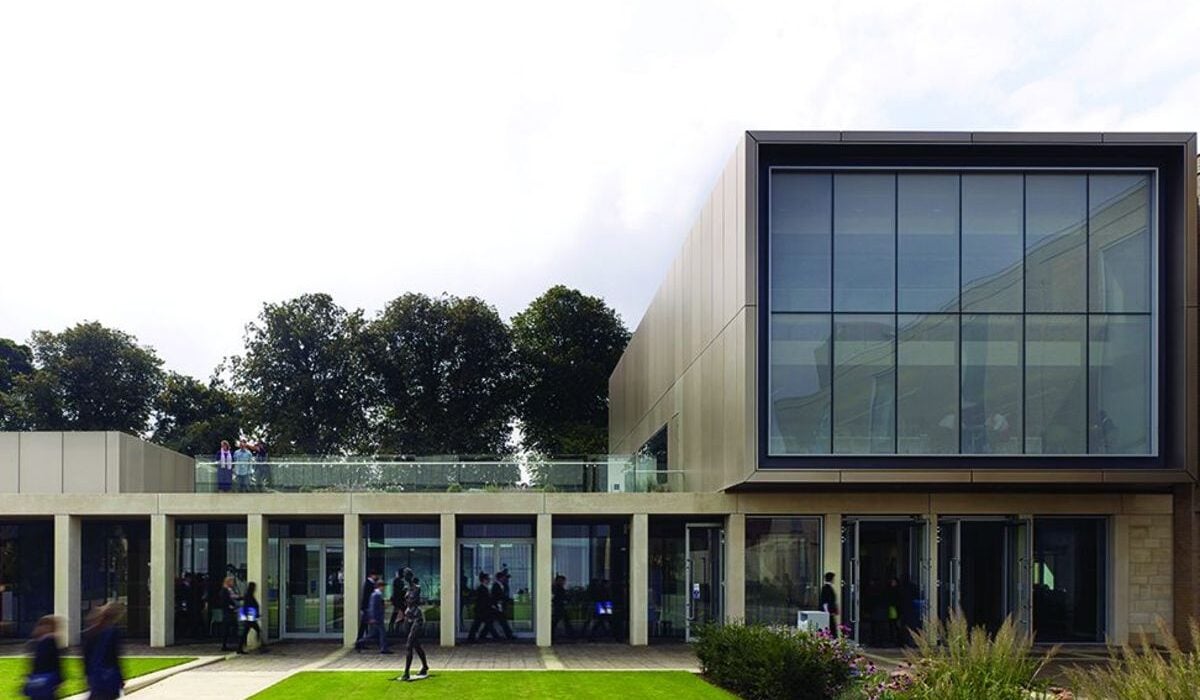
Uppingham School

What “good” looks like: understanding constraints as a system

Projects move more smoothly when constraints are understood as interconnected, rather than as a list of separate technical disciplines. When we integrate our engineering, planning, utilities, transport and environmental thinking, the picture changes from a series of risks to a single, coherent narrative about deliverability.

In practice, this means:

Early, integrated due diligence
Testing access, transport, utilities, flood risk, drainage, ground conditions and environmental considerations in parallel. Seeing how one affects another. Understanding the true envelope of possibility before commitments are made.

Clear, accessible outputs
Governors, councillors, trust boards and community groups don’t need jargon, they need clarity. Visual summaries, early warnings and simple diagrams give decision‑makers confidence that constraints are understood and manageable.

Honest, evidence‑based planning strategies
A planning application that openly acknowledges known constraints, provides proportionate mitigation and sets realistic conditions tends to move faster and with fewer surprises than one built on optimistic assumptions.

Phasing and logistics shaped around the learner, not the contractor
When phasing for projects utilising existing spaces, respect exam timetables, safeguarding boundaries, circulation routes and the school’s own operational rhythms, construction becomes a partnership rather than a disruption.

Ground investigations that answer the right questions
Not more surveys, but better targeted ones. Investigations that focus on what will genuinely influence programme, cost or foundation strategy.

When all these pieces come together, decision‑makers can move forward with a programme that makes sense, a budget that reflects real-world constraints, and a clear understanding of how the project will actually be delivered.
Planning that is both pragmatic and persuasive

Planning authorities, councillors and residents appreciate openness. Good education projects succeed when they present a clear, joined‑up story:

  • Why this site and not another
  • How the design responds to real constraints
  • What the school, college or university needs to function safely during each phase
  • How impacts will be mitigated and monitored
  • Which commitments are essential, and which would add unnecessary cost or time pressure

When the story is honest and backed by evidence, the conversation becomes constructive rather than adversarial. It is easier for planners to recommend approval, easier for councillors to support the scheme publicly, and easier for residents to trust the process.


Project programmes that protect what matters

Education projects are defined by immovable moments: student recruitment intakes, exams, funding approvals, procurement windows. A programme is only realistic if it is built around these key moments in the academic year.

The strongest project programmes we see tend to have:

  • Early clarity on utilities lead‑times
  • Defined exam‑safe periods
  • A logical sequence for enabling works, temporary accommodation and final build
  • Realistic risk allowances informed by targeted investigations, not generic percentages
  • A critical path that aligns with the lived reality of running a school, college or university

A well-constructed programme does more than chart activities; it provides confidence for boards and stakeholders who must defend timelines under scrutiny.


A shift in mindset: from “can it be designed?” to “can it be delivered?”

At its core, a deliverable education project depends on one thing: surfacing and addressing risk early, before it becomes a problem that must be solved under pressure.

When constraints are understood together, rather than separately, the pathway from masterplan to first bell becomes significantly smoother. Budgets hold. Programmes withstand interrogation. Stakeholders stay aligned. And the people at the heart of the scheme, learners, teachers and families, experience far less disruption.

Our work across the education sector has shown that this early integration doesn’t slow things down. It accelerates confidence, reduces rework, and it creates projects that can stand up to the technical, political and community scrutiny that comes with public investment.

Final thoughts

The education sector deserves more than defensible drawings, they deserve projects that will actually get built, on time, with clarity, transparency and respect for the communities they serve.

If you’re preparing to start an education project, or you’re at a point where things feel more complicated than expected, we’re always happy to share what we’ve learned over the years. Not as a sales pitch, simply as a conversation with people who understand the pressures, the pinch points and the routes through them.

Get in touch with Lee Bowers, who heads up our Education Sector Focus Group.

Structural Director

Lee Bowers

Read Profile

More News

Brookbanks CPDs: Expert Insights for 2026

January 28, 2026

Explore our new programme of 30+ CPDs, sharing practical insight across planning, design and delivery in sectors from education and healthcare to infrastructure and residential. Hosted by our specialists and shaped by real project challenges, sessions are available online or in person for teams of any size. Contact Owen Smith to book your CPD.

Read More