

Skip to content

The Building Safety Levy (BSL) is fast approaching, coming into operation in England on 1 October 2026. Much of the industry discussion so far has understandably focused on the rate of the levy, and its potential impact and importance as part of development planning. However, for many developers, the timing of the payment may be as important, if not more, than the amount itself.

The issue of when the money actually has to leave the business is one developers should pay close attention to. This is particularly relevant where schemes are being delivered in phases, where sales receipts are expected to be generated over time, or where cash flow is closely aligned with the construction and occupation programme. The common assumption is that the BSL will operate broadly like a cost attached to individual plot sales, with the developer paying as homes are sold or towards the end of a development.  However, that is not what is stipulated by Regulation 24 and this may have costly implications for developers’ cash flow plans.  

Under Regulation 24 of the BSL Regulations 2025, the levy charged against a building control application ‘must be paid by the earlier of the completion notice date or the first date of occupation’. Importantly, where a building control application covers more than one residential building, the first date of occupation means the date on which any of those buildings or parts is first occupied. 

In practical terms, this means that where a single building control application covers 200 homes, and the first home is occupied, the BSL associated with that application may become payable at that point. The developer cannot necessarily wait until the remaining 199 homes have been completed and sold, creating a significant consideration for development viability, funding and cash flow certainty.  

For example, if a large application generates a £2m BSL liability, a developer could potentially have to fund the full £2m when the first relevant homes are occupied, rather than progressively recovering the cost through hundreds of individual sales. 

The Government’s own guidance reinforces this guidance, describing the levy as ‘a charge that must be paid before completion of the building work or occupation, whichever is earlier’, bringing building control and cash-flow strategies much more closely connected. 

For larger or more complex schemes, developers should act now and consider whether building control applications align with genuine construction and delivery phases.  As phasing will now have the additional pressure of dictating when levy liabilities will be due. Planned correctly, this allows for payments to be spread across timeframes, more closely aligned to when a development is actually being delivered and when income is generated.  

But the Government has made clear that developers cannot circumvent the levy by breaking a major development into smaller applications.  Instead, it is about understanding the interaction between the building control application, construction programme, occupation dates and the resulting cash requirement before the applications are submitted. 

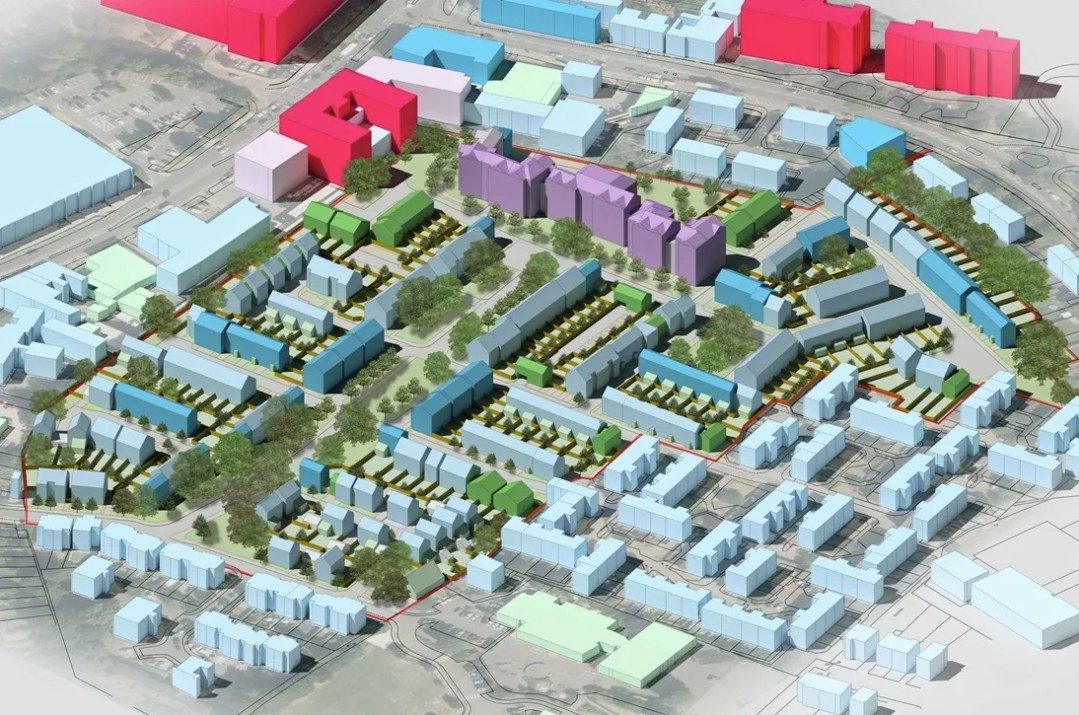
A sprawling residential area in Luton, England, surrounded by fields under a cloudy sky.

What should developers do now? 

Developers should start by reviewing major sites where building control applications are likely to be submitted on or after 1st October 2026, and identify any applications that may legitimately be submitted before that date, where appropriate and in line with traditional arrangements. It will also be Important to map proposed building control applications against the construction and occupation programmes, so that potential payment triggers can be understood at an early stage. 

The next step will then be for developers to calculate the potential BSL liability for each application and assess the likely timing of payment under Regulation 24, modelling the cash-flow impact to prevent negative implications. Where the delivery programme supports it, genuine re-phasing of building control applications may help to align levy payments more closely with the actual predicted construction programme helping to bring them back in line with cash flow.  

An aerial view of houses surrounding a road featuring a roundabout

At Brookbanks, we believe the BSL should now be treated as a development cash-flow issue, with the impact to affect developers and their projects more widely. Moving forward, understanding the payment trigger before building control applications are structured will make a notable difference to how developers should plan, fund and deliver their schemes.


Ben Wakeling, Head of Cost and Commercial at Brookbanks
Head of Cost and Commercial

Ben Wakeling

Read Profile

More News

A red brick semi detached house in a residential area. It has a grey driveway with greenery in the front garden

Brookbanks Podcast #25: Policy, Progress & Positivity

September 16, 2026

Residential As the UK continued to face pressure to deliver more homes, the housebuilding sector was operating in a complex and fast-moving environment. From policy reform and planning uncertainty to skills availability and new regulatory requirements, the conditions shaping residential development remained firmly in focus. The latest episode of the Brookbanks Podcast our Head of Cost & Commercial, Ben Wakeling sat down with Neil Jefferson, CEO of Home Builders Federation to discuss the current policy and initiatives HBF are in conversation with the Government about. Drawing on their experience across residential build planning, Ben and Neil share their perspectives on where the UK housebuilding industry currently stands, whether there is enough labour force to keep up with property building demands and the opinion of how the building safety levy will affect the industry.

Read More

Brookbanks Webinar: The common hurdles of Drainage Verification Reports.

September 16, 2026

Requests for drainage verification reports from local authorities as part of development approval have become increasingly frequent, as Sustainable Drainage Systems (SuDS) have been introduced as guidance across England, following their mandatory introduction in Wales in 2019. Planning authorities are placing greater emphasis on demonstrating that the designed drainage system for a development has been built in accordance with the approved design, is performing as intended, and will operate effectively once the development is occupied. In our latest webinar, Toby Crayden, Civils Technical Director, explored what a good drainage verification report should look like, the common hurdles that need to be overcome, and how early engagement and good record-keeping can make the process more straightforward, reduce delays and costs.

Read More