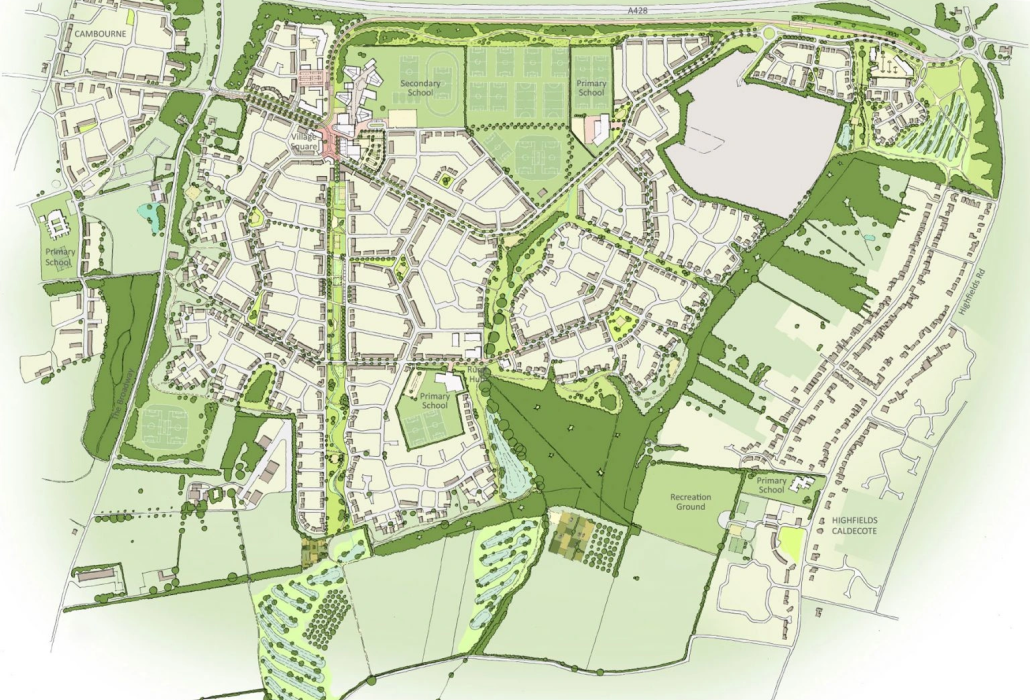
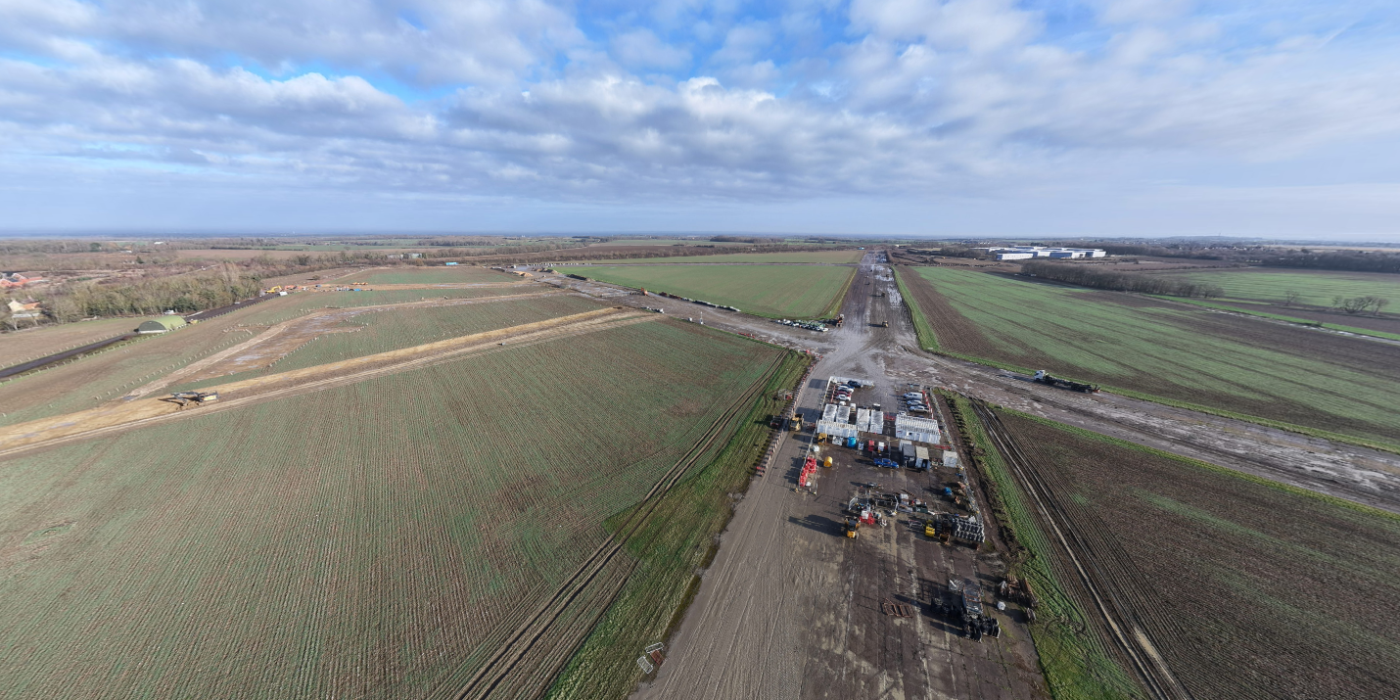
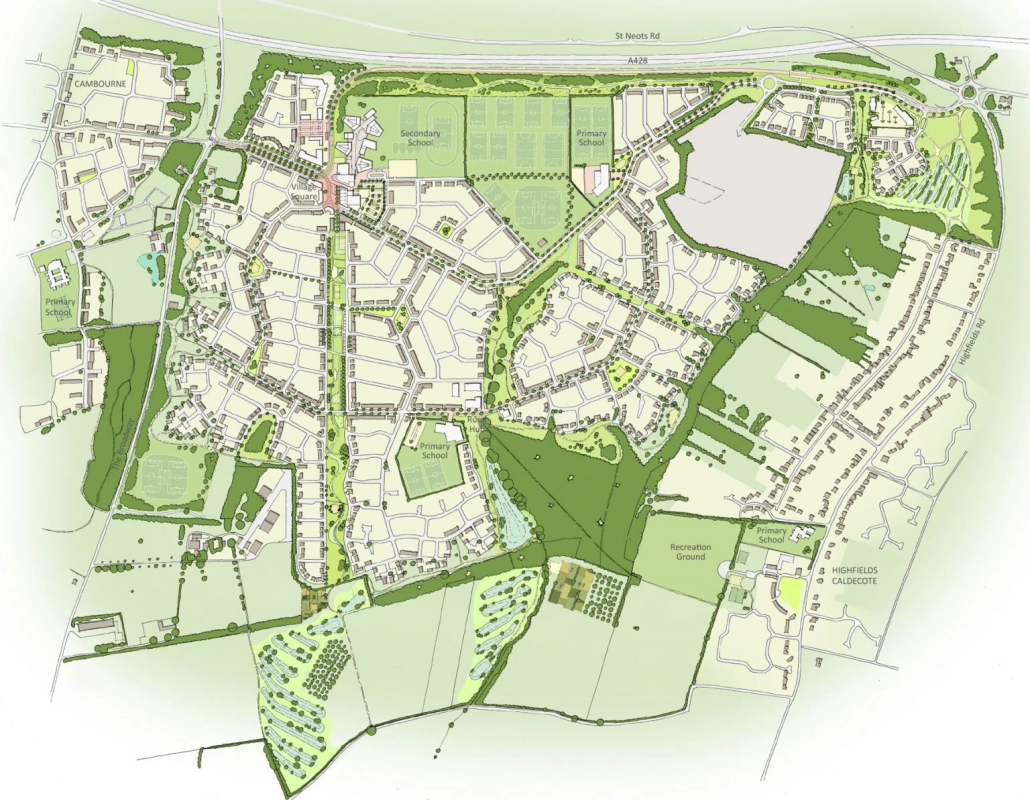
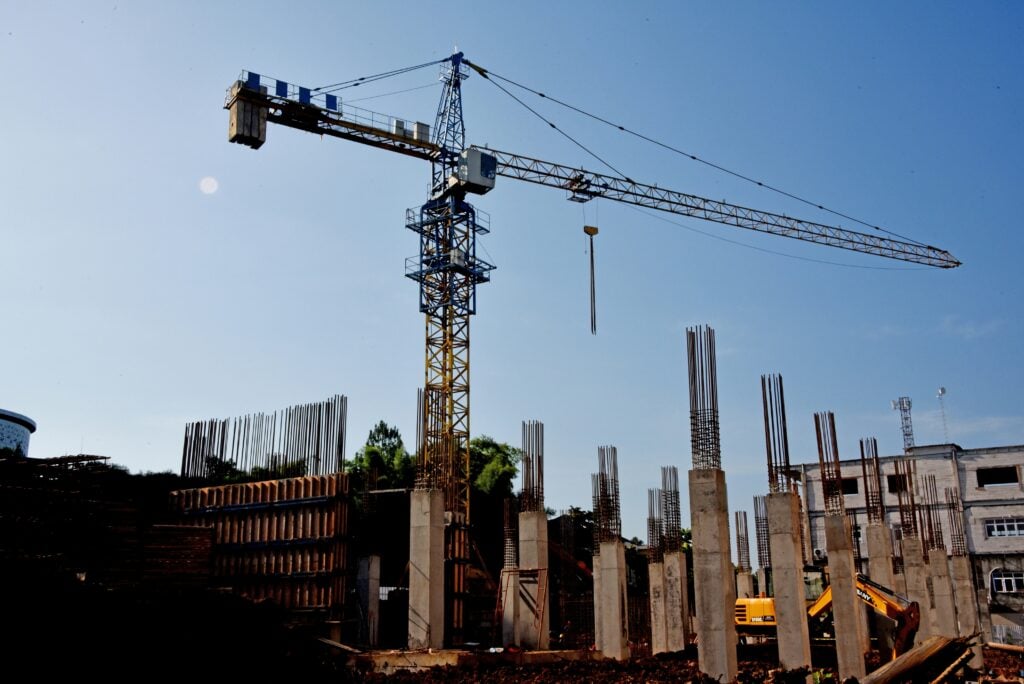
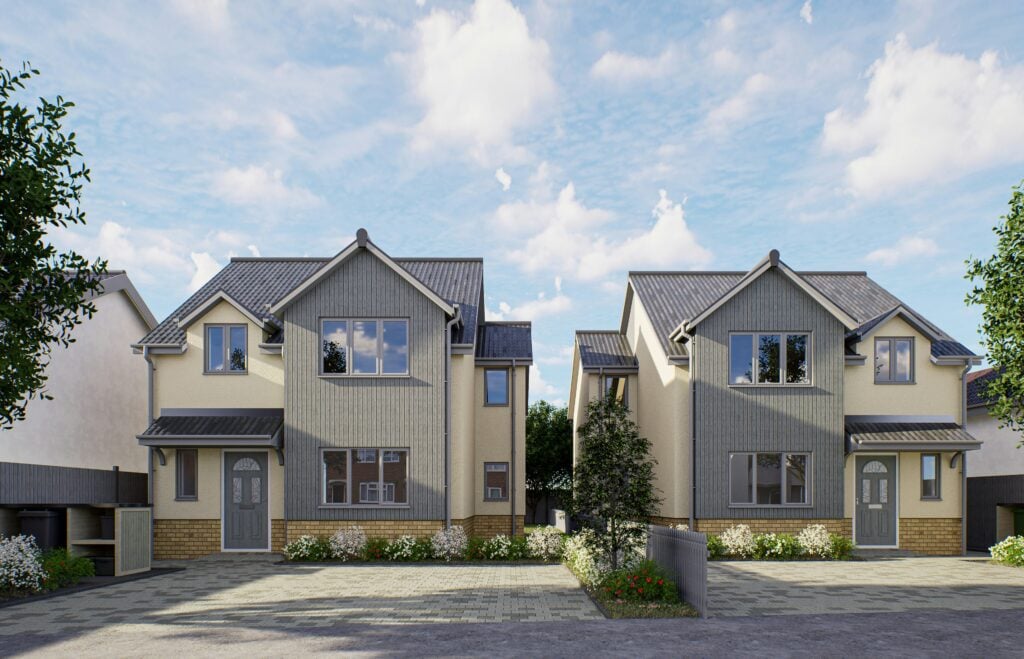
On a former airfield, ground profiles, material movements and load bearing requirements significantly influenced cost exposure. Working in conjunction with their engineering colleagues, our commercial specialists quantified cut-and-fill balances, evaluated export risks, and shaped engineering solutions that reduced unnecessary costs while maintaining technical robustness. The development’s drainage and SuDS strategies also required careful commercial oversight. They reviewed design options for basins, pipework, conveyance routes, and attenuation volumes, examining each from engineering, regulatory, and financial perspectives. This integrated approach ensured that the final drainage strategy met policy requirements without inflating maintenance liabilities or long term adoption costs.
Another key area of commercial influence was working with our utilities experts to develop and plan from the outset. Early utility assessments and searches enabled them to forecast reinforcement, diversion, and connection costs before statutory engagements were formalised. This avoided common pitfalls in which utility budgets escalate late in design and helped secure realistic lead times aligned with the whole programme. Crucially, the development contained fixed milestones linked to land receipts. These dates carry substantial commercial importance. Our team managed cashflow forecasting, aligning expenditure to programme triggers and ensuring the sequence of works, from enabling packages to major infrastructure, supported the financial structure of the scheme. By connecting programme and cost at such an early stage, we built resilience into the delivery plan and reduced the likelihood of costly delays.
Throughout design and procurement, they provided contract administration, budget management, and negotiation support, ensuring that agreements, scopes, and commercial responsibilities were clearly defined. This vigilance helped mitigate the risk of claims, reduced ambiguity in procurement and gave the client improved cost predictability during each phase. Our commercial specialists also conducted opportunity reviews and risk assessments, identifying areas where the project could deliver savings or unlock additional value. These opportunities ranged from revisiting engineering specifications to restructuring phasing, improving logistics, and sequencing works differently. Each review combined technical insight with financial understanding, resulting in measured, credible opportunities grounded in practical delivery.
Collectively, these activities demonstrate the central role of our cost & commercial specialists on large multi-phase projects such as Bourn Airfield. By placing commercial guidance alongside development management, engineering, planning and environmental inputs, we ensured that the development progressed with clarity, financial discipline and long term value at its core.