Skip to content
three electric vehicle chargers attached to a red brick wall in an outside car park

At Brookbanks, we know EV charging becomes far more manageable when it’s approached as part of a wider development picture rather than an isolated task. Rising regulatory demands, limited capacity, cost pressures and the realities of underground or enclosed parking all interact in ways that can affect programme, viability and long‑term performance. This article looks at the recurring challenges we see across residential, commercial and mixed‑use projects and the practical steps that help developments meet Part S requirements, manage grid limitations, integrate load‑balancing and smart‑charging systems, and plan for solar PV and battery storage. The aim is to provide clear, grounded insight that helps teams design EV strategies that genuinely stand up to modern development demands.

The development landscape is becoming more complex every year. Rising infrastructure demands, intensifying regulation, stretched utilities, and increased expectations from occupiers all place pressure on projects that must still remain commercially viable. For many of our clients, EV charging is one of the clearest examples of this shift. It is a requirement that has arrived quickly, adds cost, places pressure on power networks, and introduces technical challenges that weren’t previously part of the development equation.

Yet the need for it is unavoidable. Electric vehicles are no longer a fringe consideration, they are influencing strategic planning decisions, shaping design parameters, and affecting long‑term asset performance. The challenge for developers is to deliver EV provision that is compliant, safe and future-ready, while still protecting the financial and programme ambitions of the project.

That balance is not always easy to achieve. Many projects face difficulties securing the necessary electrical capacity. Others are wrestling with how EV charging interacts with underground or enclosed parking. Some are navigating cost caps, insurance questions or the operational realities of managing demand across multiple users. And underpinning all of this is the simple truth that expectations continue to rise: residents, tenants and buyers increasingly see EV charging as a basic service, not a premium feature.

Against this backdrop, understanding the evolving regulatory landscape, and its practical implications, is essential.

Understanding Part S in the Context of Real Projects

Part S of the Building Regulations has been one of the most significant recent policy shifts for developers. It introduces mandatory EV charging infrastructure for a broad range of new and renovated buildings and, importantly, places equal emphasis on passive cabling as it does on installing live charge points.

For housing schemes, every new home with associated parking must include an active charging point, even when created through change of use. In larger residential renovations, which will have more than ten parking spaces, one active charger is required per dwelling with associated parking, while the remaining spaces must include passive cable routes. In commercial environments, the requirement is to provide at least one active charger where the building has more than ten parking spaces, with passive cabling to a fifth of the total.

On paper, these requirements are straightforward, but in reality, their impact varies dramatically depending on the project type, the existing site infrastructure, the availability of electrical supply, and the physical constraints of the car parking strategy. The emphasis on passive cabling is often welcome, as it provides a simple route to future expandability without excessive upfront cost. But it does require early coordination, retrofitting ducting later is rarely inexpensive or efficient.


An underground car park with concrete flooring and supporting concrete pillars

The Challenges of EV Charging in Covered and Underground Car Parks

One area where we frequently see project teams seeking clarity is enclosed parking: undercrofts, sub levels and multi‑storey car parks. Here, concerns from insurers, building control and fire engineers often converge. This is understandable, introducing electrical equipment into confined spaces prompts important safety considerations.

Current policy focuses on ensuring passive infrastructure is provided in these environments, but active charging can still be delivered where separation distances, fire‑rated construction and clear risk mitigation strategies are in place. Guidance suggests designing for additional space around charging bays and, where feasible, providing compartmentation to limit fire spread. These principles are now becoming familiar across the industry but must be applied proportionately; the most successful solutions are usually those that balance practical safety with operational usability.

But a key challenge with this is perception. Despite evidence showing electric vehicles do not carry a greater fire risk than petrol or diesel vehicles, concerns remain. Addressing these with a grounded, evidence‑led approach helps build confidence among insurers and regulators and smooths the approvals process.

Electrical Capacity: A Constraint That Demands Early Attention

The most material obstacle for many developments is simply the availability of electrical capacity. EV charging loads do not benefit from the diversity that applies to many other building systems, and as a result, demand calculations can quickly exceed what the local network can accommodate. In parallel, many regions are already experiencing constraints due to cumulative growth.

This is where early engagement makes a considerable difference. Understanding the baseline capacity, the timing of potential network upgrades and the likely demand profile of the development can inform phasing strategies that keep momentum on site while managing risk. For some developments, securing the required supply upfront is achievable; for others, the preferred option is to prioritise passive infrastructure and layer in active capacity as its needed over time.

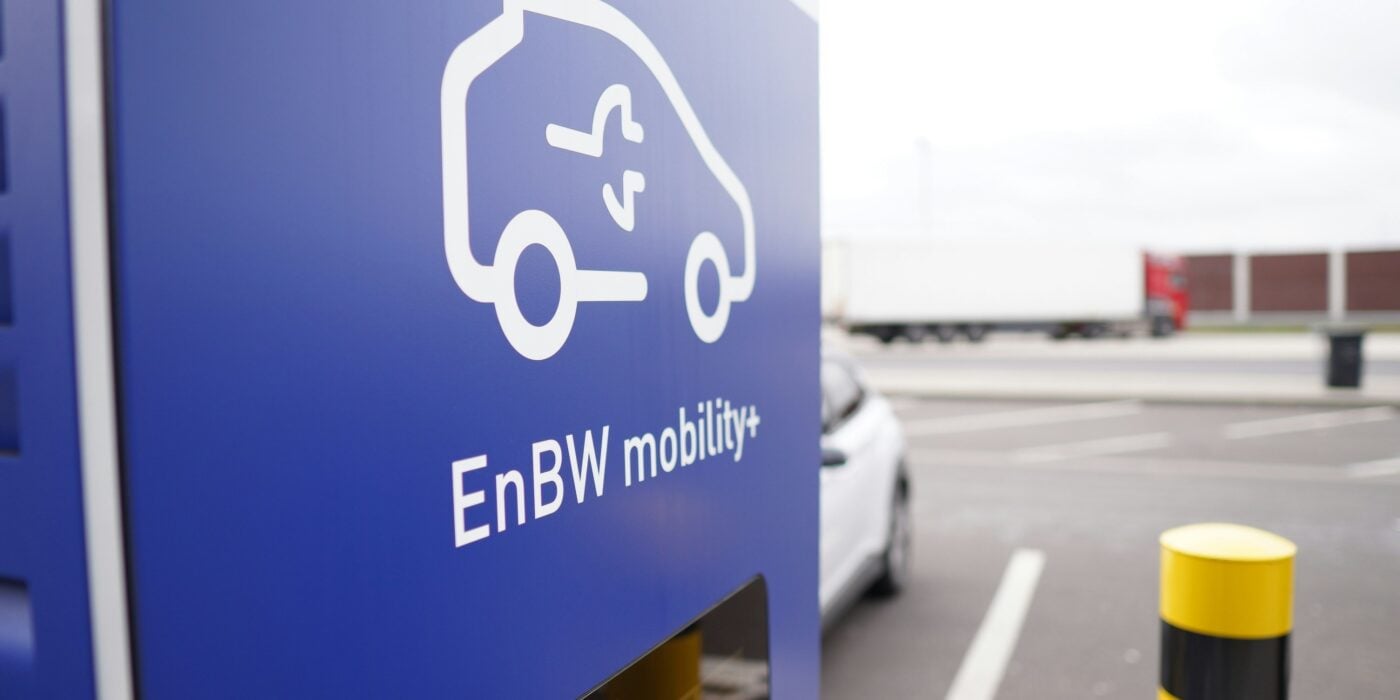
a blue sign in an outdoor car park indicating electric vehicle charging is available

Load Management and Smart Charging: Making Limited Capacity Work Harder

In response to these supply challenges, load‑balancing and smart charging systems have become increasingly important. Rather than requiring a dedicated supply for every charge point, these platforms distribute energy intelligently based on demand, time of day, and pre‑set priorities.

For developers, the benefit is clear: higher numbers of charge points can be accommodated without triggering major network reinforcement. For operators, these systems offer transparent control and monitoring, helping to manage usage fairly, capture data, set tariffs where appropriate, and prevent public access where a private system is required.

What matters most is designing these systems into the development from the outset. Retrofitting load management later is possible, but integrating it early produces a cleaner, simpler and more cost-effective solution.

Supporting the Grid Through Renewable and Storage Technologies

Complementary technologies such as rooftop solar and battery storage are now playing a growing role in EV charging strategies. Solar generation can offset daytime charging loads, while batteries enable sites to store energy and release it during peak periods or when additional capacity is required. Combined with scheduled charging, these approaches can smooth demand and reduce pressure on both the network and the project’s electrical infrastructure.

They also contribute positively to sustainability performance, which is increasingly important in funding decisions, planning negotiations and long-term asset value.

Cost Pressures and the Importance of Phasing

EV charging inevitably introduces cost pressures. Part S provides a degree of flexibility through a financial cap on residential schemes, enabling developers to focus on passive infrastructure where full installation would exceed an average cost threshold. But beyond regulatory caps, it is the sequencing of delivery that often makes the biggest difference to budget control.

Phased installation, active where necessary, passive everywhere else, keeps developments compliant while allowing investment in charge points to track demand. This approach avoids overspend on equipment that might otherwise sit underused in the early years of a scheme’s life.

A woman stood outside her house taking off an electric vehicle charger off its hook. It is attached to a brick wall on the outside of the building.

Looking Ahead: Delivering EV Infrastructure That Supports Long‑Term Value

The rapid rise of EV charging requirements can feel like another layer of complexity in an already demanding development environment. But when approached with a strategic, joined‑up mindset, it becomes a manageable and even value‑adding component of modern placemaking.

Successful schemes tend to have three things in common. First, they frame EV charging as an infrastructure challenge, not simply an electrical one, something that affects planning, layout, phasing and commercial strategy. Second, they address risk head-on, particularly in enclosed parking areas, through clear and proportionate design principles. And third, they integrate capacity planning, load management and renewable technologies into one coherent strategy rather than treating each in isolation.

If you would like to explore how these principles apply to your development, whether at pre‑planning stage or during detailed design, we’re always happy to share further insight and lessons learned across a wide range of project types.

Get in touch with Matthew House our Associate Electrical Director if you’d like to talk through any of your projects EV Charging infrastructure requirements.

Matthew House, Associate Electrical Director at Brookbanks
Associate Electrical Director

Matthew House

Read Profile

More News

A street of Brookbanks residential houses

Our February 2026 Newsletter

February 23, 2026

Welcome to our February 2026 newsletter. In this issue, we will be sharing what’s been happening over the past month, including our two new podcasts highlighting the common pitfalls around S278 and S38 highway approvals, and what the Planning & Infrastructure Bill means for developers in England and Wales, with special guest Mark Harris from HBF Wales. We’re also looking back on our latest article, which explored how unspent S106 and CIL funds create opportunities to review, challenge and optimise legacy obligations, and why combining planning expertise with commercial insight is key to unlocking value. Plus, we are rounding off by showcasing one of our team's achievements.

Read More
An aerial view of a Brookbanks construction site.

Brookbanks Webinar: De-risking Infrastructure Design

February 18, 2026

Earlier this month, we hosted a lunch-time webinar exploring how infrastructure design can be strengthened well before construction begins. Led by our Civil Engineering specialists Ryan Meade and Toby Crayden, the conversation focused on the practical steps that help to reduce uncertainty and make the transition from design to delivery smoother and more predictable. Their session looked at the real‑world challenges that commonly appear between early drawings and activity on site. Ryan and Toby shared their experience of how early awareness, clearer coordination and the right conversations at the right time can make a measurable difference to project outcomes.

Read More
A row of red brick houses with blue sky and a field in front of them.

Two Years On: Billions Still Sitting in Unspent Developer Contributions and What That Means for Developers

February 18, 2026

Two years after the Home Builders Federation (HBF) first highlighted the scale of unspent developer contributions, more than £8 billion in S106 and CIL remains unused across England and Wales, with a significant portion dormant for over five years. For developers, it raises a critical question: if infrastructure isn’t being delivered, are these obligations still proportionate or commercially justified? This article explores why the issue persists and how reviewing triggers, outdated requirements and opportunities for modification or claw-back can turn S106 from a fixed liability into an actively managed commercial tool that protects viability and unlocks value.

Read More