




Skip to content
Stunning view of a towering power line against a vibrant sky, showcasing energy infrastructure in nature.

In our latest podcast, Grant Vasey, Director for our Mechanical and Electrical Engineering Group, and Mat Capper, Director of Utilities, delves into one of the most pressing challenges facing UK industry today: Industrial Energy Security.

As demand for power continues to rise across key sectors, and with grid constraints becoming more pronounced, the team explores how developers and operators can navigate the evolving energy landscape to ensure resilience, reliability, and long-term viability.

Understanding the Requirements of Industry

The conversation begins by unpacking the energy demands of modern industry. From advanced manufacturing to data centres and logistics hubs, today’s industrial users require not only more power, but more secure, stable, and sustainable sources of it. The team highlights how energy availability is now a critical factor in site selection, investment decisions, and long-term operational planning.

Power Availability Across the UK

A key theme of the discussion is the regional disparity in power availability. While some areas of the UK benefit from robust grid infrastructure, others face significant constraints, particularly in high-growth corridors. These limitations can delay development, increase costs, and limit the scale of industrial operations.

Grant and Mat share insights into how these challenges are playing out on the ground, and what it means for developers looking to bring forward energy-intensive schemes.

A stunning aerial view of Dubai's illuminated skyline at night, showcasing its modern architecture and busy roads.

Current Trends and Growth Sectors

The team also explores the emerging sectors driving demand, including:

  • Battery storage and gigafactories
  • Advanced manufacturing
  • Green hydrogen and low-carbon fuels
  • Digital infrastructure and data centres

These sectors are not only energy-hungry but also highly sensitive to fluctuations in supply and cost, making energy security a top priority.

Brookbanks’ Response: Navigating the Energy Challenge

At Brookbanks, we’re actively supporting clients to future-proof their developments through:

  • Early-stage energy strategy planning
  • Grid connection feasibility assessments
  • On-site generation and storage solutions
  • Stakeholder engagement with DNOs and National Grid

Our integrated and multiservice approach ensures that energy considerations are embedded from the outset, helping to de-risk projects and unlock long-term value.

Final Thoughts

As the UK transitions to a low-carbon economy, energy security will remain a defining issue for industrial development. This podcast offers a timely look at the challenges and opportunities ahead and how Brookbanks is helping clients stay ahead of the curve.

Listen to the full episode to hear more from Grant and Mat on how we’re powering the future of UK industry.

Members on the Podcast

Ben Wakeling, Head of Cost and Commercial at Brookbanks
Head of Cost and Commercial

Ben Wakeling

Read Profile
Grant Vasey, Mechanical and Electrical Engineering Director at Brookbanks
Director, Mechanical and Electrical Engineering Group

Grant Vasey

Read Profile
Mat Capper, Director of Utilities at Brookbanks
Director of Utilities

Mat Capper

Read Profile

More News

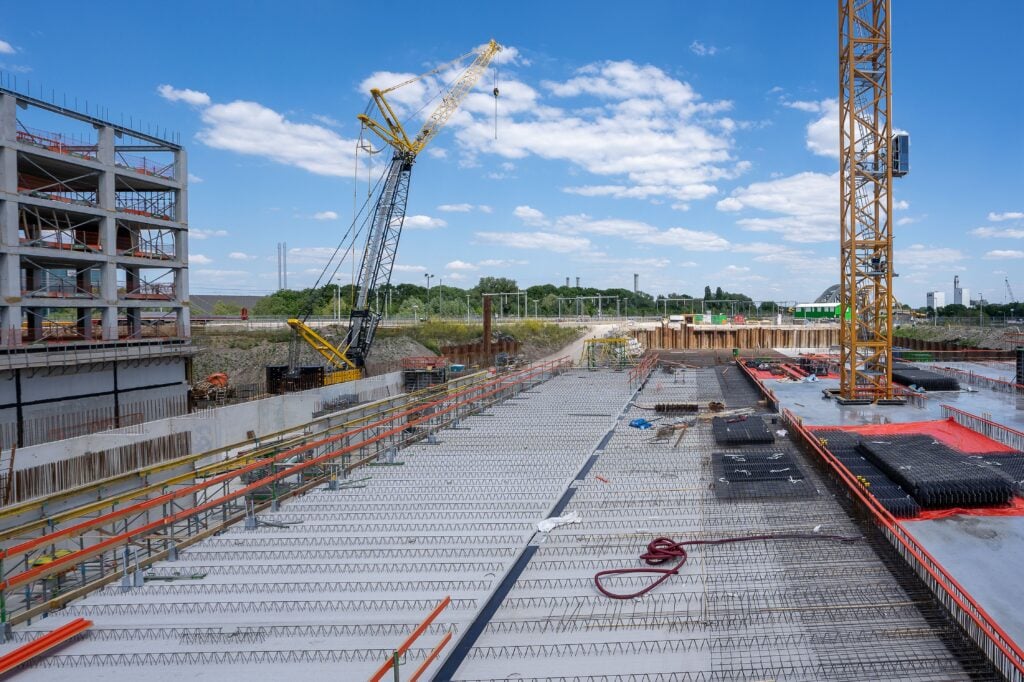
View of a busy construction site with cranes and building structure under clear sky.

Podcast #18: Design of Transfer slabs and efficient structures

June 2, 2026

As development sites become more constrained and expectations around multi-use building designs continue to rise, structural engineering choices are playing an increasingly important role in successful delivery. In our latest podcast, “Design of Transfer slabs and efficient structures,” Ben is joined by Chris Vivian and Devi Varatharajan to explore current industry trends in concrete design. The discussion focuses on how transfer slabs impact construction efficiency, carbon footprints, and why early-stage engagement is critical to optimizing building design.


Read More
Group of students and teacher walking in a school courtyard with modern architecture and playground.

Delivering Education Infrastructure: Direct Delivery or Section 106 Contributions?

May 22, 2026

Education facilities play a vital role in shaping successful residential communities. Alongside providing essential school places for growing populations, they help create well-connected neighbourhoods, support long-term community wellbeing and contribute positively to placemaking outcomes. For developers bringing forward significant housing schemes, deciding how education infrastructure obligations should be delivered is rarely straightforward. In most cases, this involves either directly delivering a new education facility as part of the development, or making a financial contribution through a Section 106 Agreement to support provision elsewhere. Each approach carries implications for cost, programme, planning strategy and the long-term success of the development.

Read More
Aerial view of various vehicles driving on asphalt road near typical residential houses in suburban district on sunny day

Podcast Episode #17: Moving Places, Managing Noise

May 20, 2026

As development sites become more constrained and expectations around placemaking continue to rise, the interaction between transport planning and acoustics is playing an increasingly important role in successful design. In our latest podcast, “Moving Places, Managing Noise,” Ben Wakling is joined by Melanie A’Lee and Tom Quaife-Jones to explore how these two disciplines come together in practice. The discussion focuses on how early coordination between transport and noise specialists can improve scheme viability, reduce planning risk and ultimately create better places to live.

Read More