
Skip to content

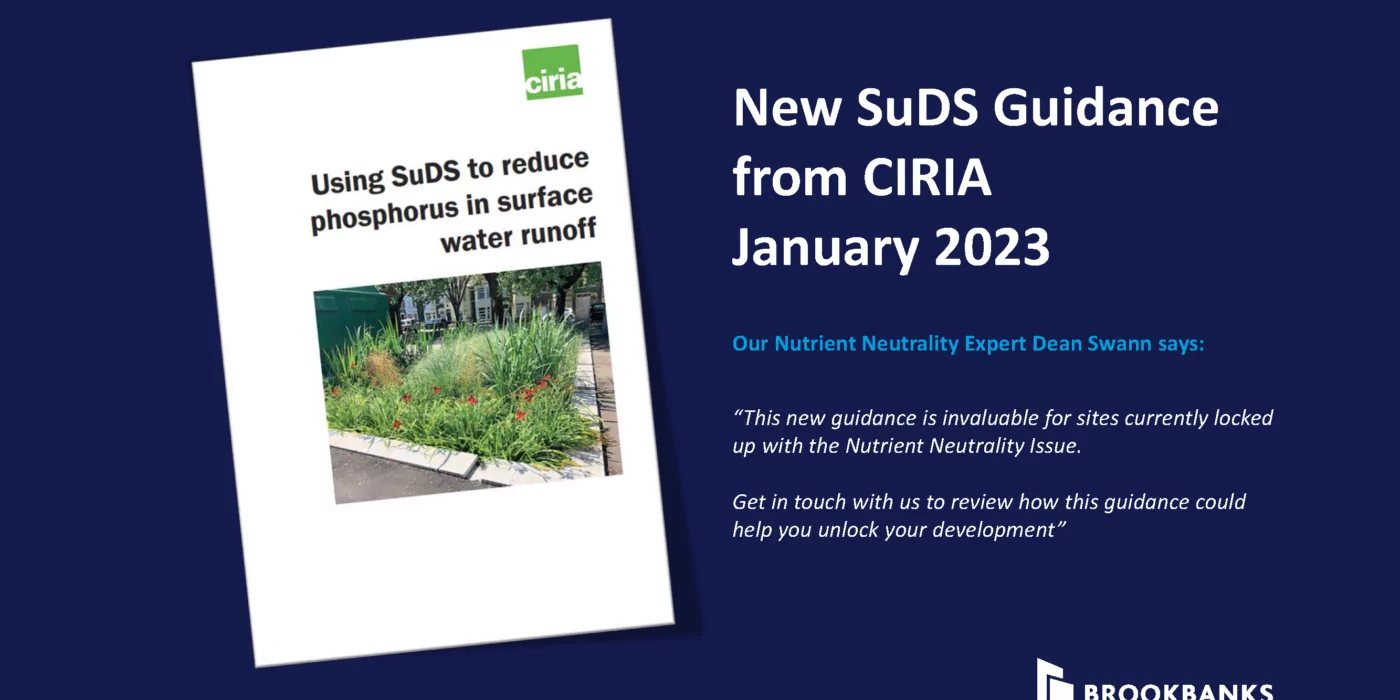
Using SuDS to reduce phosphorus in surface water runoff.

CIRIA, in conjunction with Natural England, have released guidance on assessing Sustainable Urban Drainage Systems on site for their potential to remove nutrients from development runoff.

Brookbanks, who have been involved in driving this important consideration forward, are now in a position to include this aspect in future Nutrient Assessments.

As we have done for many successful applications this new tool will allow us to maximise the benefits from your development, driving your potential to achieve neutrality and deliver development in Nutrient hit areas of the Country.

Dean Swann, Group Technical Director at Brookbanks
Technical Director, Land, Development and Communities Group

Dean Swann

Read Profile
Siobhan McGlynn, Principal Engineer at Brookbanks
Principal Engineer

Siobhán McGlynn

Read Profile

More News

An aerial view of a Brookbanks construction site.

Brookbanks Webinar: De-risking Infrastructure Design

February 18, 2026

Earlier this month, we hosted a lunch-time webinar exploring how infrastructure design can be strengthened well before construction begins. Led by our Civil Engineering specialists Ryan Meade and Toby Crayden, the conversation focused on the practical steps that help to reduce uncertainty and make the transition from design to delivery smoother and more predictable. Their session looked at the real‑world challenges that commonly appear between early drawings and activity on site. Ryan and Toby shared their experience of how early awareness, clearer coordination and the right conversations at the right time can make a measurable difference to project outcomes.

Read More
A row of red brick houses with blue sky and a field in front of them.

Two Years On: Billions Still Sitting in Unspent Developer Contributions and What That Means for Developers

February 18, 2026

Two years after the Home Builders Federation (HBF) first highlighted the scale of unspent developer contributions, more than £8 billion in S106 and CIL remains unused across England and Wales, with a significant portion dormant for over five years. For developers, it raises a critical question: if infrastructure isn’t being delivered, are these obligations still proportionate or commercially justified? This article explores why the issue persists and how reviewing triggers, outdated requirements and opportunities for modification or claw-back can turn S106 from a fixed liability into an actively managed commercial tool that protects viability and unlocks value.

Read More