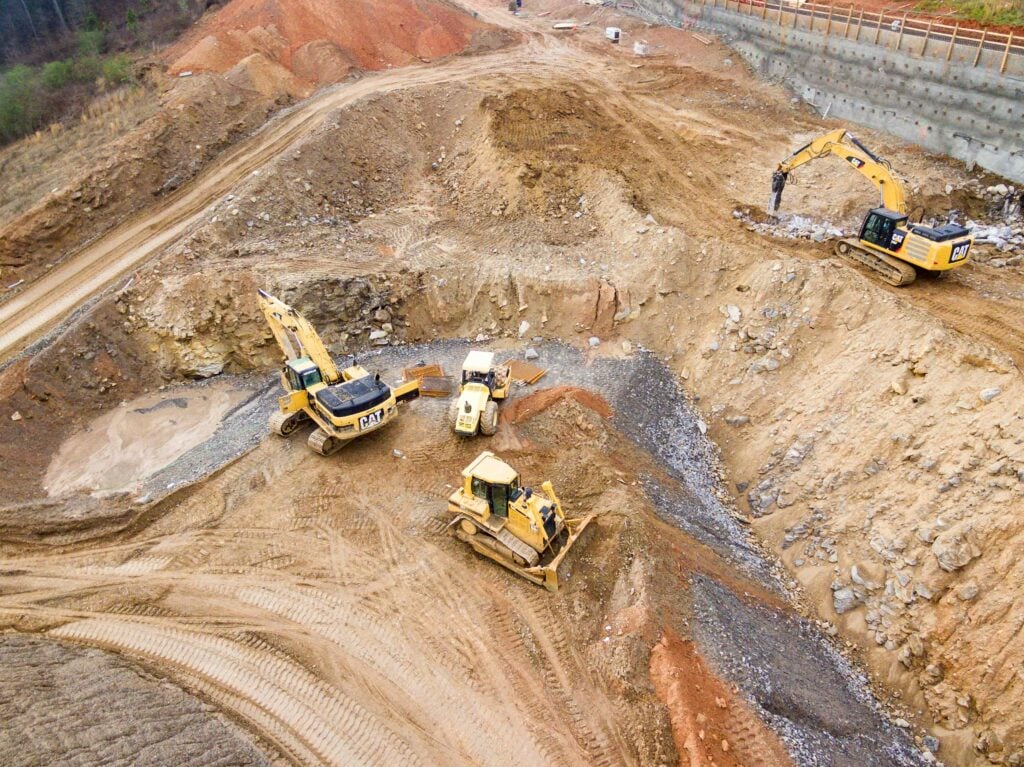
Podcast Episode #16: Material Matters, Cut and Fill
May 5, 2026
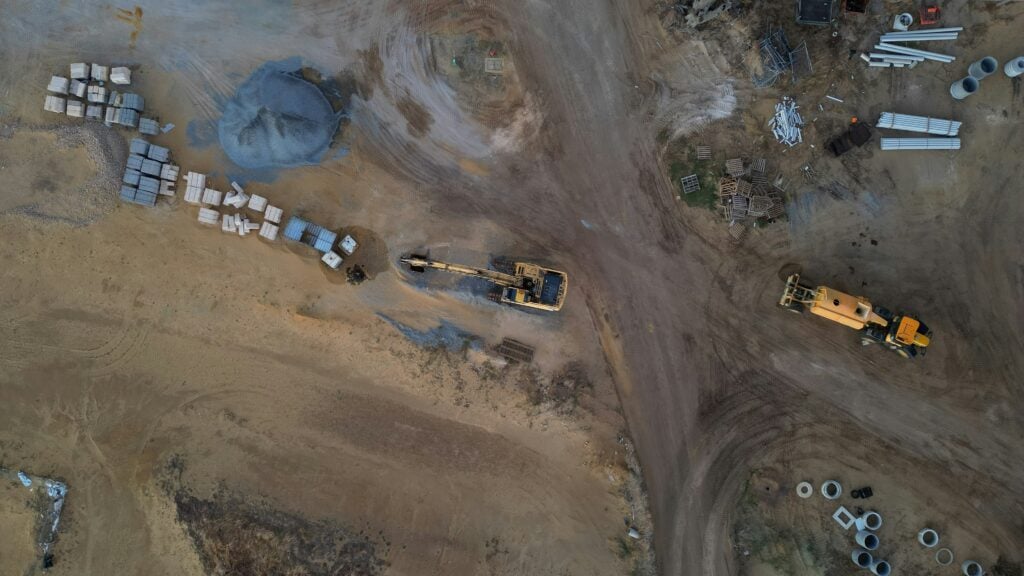
Explore how early cut and fill strategy, sequencing and on‑site material management shape cost, programme and environmental outcomes on development projects.

The Risks Stalling Healthcare Projects There's a version of every healthcare project that looks deliverable on paper. The site sits within the right catchment. It's in the strategic outline case. The ICS has signed off on the clinical model, the architects have done something genuinely thoughtful with the brief, and the project team is cautiously optimistic about hitting the OBC submission window. Then the ground investigation comes back… or the highways authority raises a junction capacity objection that nobody reviewed thoroughly during site selection. Or the drainage strategy is finalised two weeks before the planning committee, and the mitigation required has discreetly added seven figures to a capital budget that is already full of assumptions. This might be “just how things are”, but it’s important to remember that healthcare projects carry specific consequences that a delayed commercial scheme may not have.
A delayed commercial warehouse could be embarrassing and financially costly. But a stalled diagnostic hub, an urgent treatment centre, or a community mental health facility can easily become a political event on top of those impacts, too. It gets raised at ICB board, it appears in NHS England performance conversations, and if it involves public capital, CDEL, PSCP frameworks, or a ProCure route, it generates written questions that somebody has to answer, in public and in many cases under oath.
That accountability structure changes the delivery risk profile entirely. The typical development industry habit of treating technical due diligence as something you do after a site is committed doesn’t often work for healthcare schemes. There is usually no room for late surprises, as the contingency has most likely already been negotiated down, and the programme is tied to a clinical service date that will have already been publicly communicated. The moment a scheme starts to slip, it affects a wide range of stakeholders, including trust boards, the ICB, and NHSE regional teams. This means scrutiny can be intense right when the project team needs time and capacity to resolve the issue.
What gets missed, and why
The project risks that cause the most damage tend to share a common characteristic: they are knowable early, but they require someone to look thoroughly.
Access and transport are the most persistent offenders on out-of-hospital and primary care estate projects. Sites get shortlisted because they’re available, because they’re in the right place geographically, or because a GP practice or community trust already holds a long lease on adjacent land. Whether an access arrangement can actually be delivered, accounting for blue-light vehicle tracking, patient drop-off and pick-up volumes, and staff parking, is rarely stress-tested until the planning application is sent out. By then, the scheme is committed, the business case is drafted around it, and funding amendments are not a realistic option.
Flood risk and drainage in clinical settings pose a specific risk that is often overlooked. Sequential and exception test arguments can usually be made to work. What’s harder to overcome is the cost of a drainage scheme on a constrained site – and harder still is the operational reality that arises for the end users. Diagnostic equipment, in particular, carries genuine flood vulnerability that can’t be fully designed out. An MRI suite or a sterile services area at ground-floor level on a site with a residual flood risk is not just a planning problem but a clinical risk that someone eventually has to own.
Utilities deserve more serious attention than they typically receive in healthcare scheme appraisals. The assumption is that a hospital or health centre is a straightforward connection with the NHS, being an established institution, gaining permanent use. The reality is that modern diagnostic and treatment facilities have significant electrical demand, and reinforcement costs in areas with constrained grid capacity can be material. A pre-application utilities capacity assessment is cheap relative to the cost of a reinforcement quote that arrives after the OBC has been submitted.
Ground conditions and environmental constraints follow the same logic. Phase 1 desk studies are standard. What’s less common is conducting a detailed investigation before a site is formally approved for the business case proposal. The cost of remediating unexpected discoveries in the ground, even if they are beneath a car park earmarked for development, is not a minor line item. The same goes for ecology constraints.
The planning picture
Healthcare clients often approach planning as a process to manage rather than a risk to price. That instinct is understandable, as many healthcare trusts are owned or subsidised by public authorities and have established relationships with their counterpart public authority planning teams. This often means there’s an assumption that a healthcare site will be treated sympathetically at planning.
Quite often it is, but site use doesn’t resolve technical issues with the application, such as highway access objections.
The schemes that move cleanly through planning are those in which the hard work was done before the application was submitted. Where the access solution has been discussed with the highway authority in pre-application, not submitted as a done deal. Where the drainage strategy was shaped by an early conversation with the Lead Local Flood Authority, not produced to discharge a condition. Where the ecology baseline was established early, so mitigation could be designed in, rather than bolted on at cost.
Community engagement matters here, too, in a way that’s unique to public authority projects. Local residents will engage with healthcare proposals in ways they don’t with commercial development – they have a stake in it, they use the services, and they have strong views about access, parking, and the neighbourhood character of clinical facilities. A scheme that has genuinely engaged before submission, and can demonstrate that, will move differently through committee than one that treats the statutory consultation as a formality.
The business case problem
There’s a structural issue worth naming directly. The NHS capital approvals process (SOC, OBC, FBC) creates pressure to present a settled, optimistic picture at each stage to secure the next approval. That pressure is real and understandable, but it creates a dynamic where technical doubts get absorbed into assumptions rather than surfaced as risk, because surfacing them may delay approval.
The consequence is schemes that reach FBC, or reach contractor procurement, often carry risks that were always there but never priced. At that point, the options are: absorb the cost from a contingency that wasn’t sized to cover it, seek additional capital approvals in a process that views cost increases negatively, or reduce clinical scope. None of those is a positive outcome, and most of them are avoidable.
Final Thought
The projects that complete with a budget intact and a programme that the clinical team can deliver services around are not the ones with a perfect site. They are the ones that planned and thoroughly investigated early on to understand what it would actually cost and built a business case that reflected the true picture.
Every risk identified before a business case is approved is one that can be owned and managed. Every risk that surfaces afterwards is a risk that threatens the whole project due to the challenging procurement environment, publicly committed timescales, and little room for contingency. Healthcare infrastructure projects, and service delivery they support, are too important to risk stalling.
Brookbanks brings cost and commercial advice together with Planning, Environmental Services, Engineering & Design, Project Delivery & Management, and Development Partner services together as one coordinated team. If you would like to discuss how we can help guide your scheme to reduce and mitigate the specific risks unique to healthcare projects, reach out to any of our healthcare specialists.

Explore how early cut and fill strategy, sequencing and on‑site material management shape cost, programme and environmental outcomes on development projects.
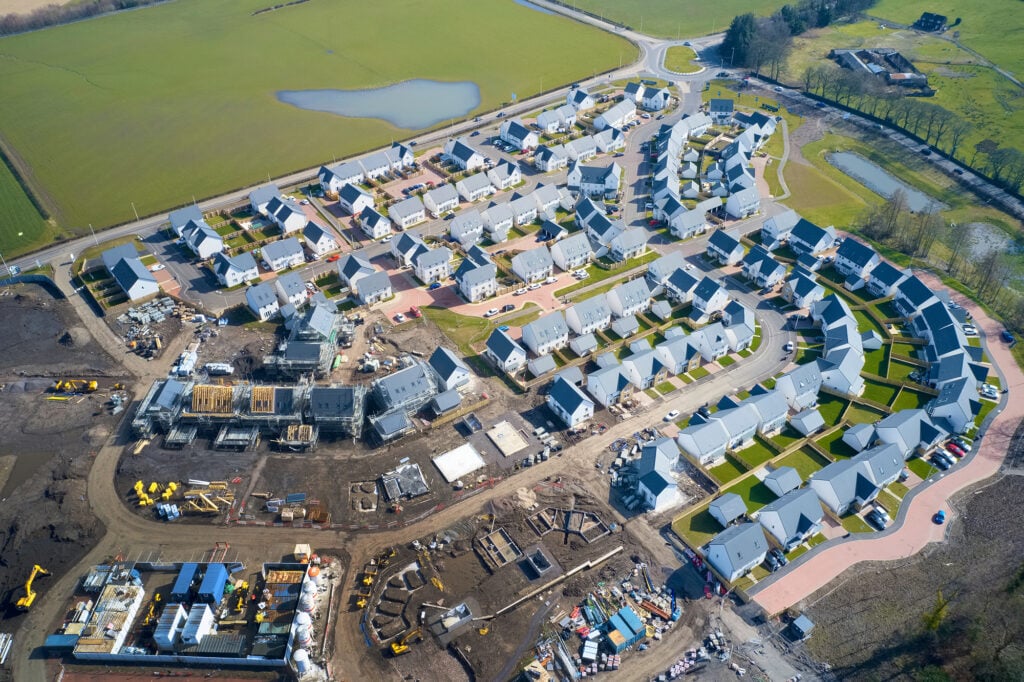
Rising geopolitical tension does not affect development viability in isolation, but through increasing pressure on energy prices, supply chains and the cost of energy‑intensive materials. Where schemes are progressed on assumptions made under more stable conditions, these pressures can quickly challenge margins, appraisals and deliverability, particularly in a flat housing market. Our article looks at how developers can respond to build cost volatility in a more informed and proportionate way. Drawing on our specialists' experience, it explores how early coordination, design‑led value engineering and integrated decision‑making can help manage cost risk, protect scheme viability and avoid short‑term measures that compromise long‑term quality and value.
Welcome to our April 2026 newsletter. In this month's Brookbanks newsletter, learn more about how high-rise developments can be made more deliverable, with guidance on how you can reduce risk and protect viability. We're also looking back on our April webinar, where Annabel Le Lohe and Katherine Peers gave a rundown of Environmental Impact Assessments and how coordination can make a real impact on project delivery. Plus, there's a recap of this month's podcasts featuring two special guests. Paul Smith, Managing Director at The Strategic Land Group, and Tom Park, Associate Development Director at Caddick Developments. Also, find out which members of our team will be at UKREiiF as well as more about the CPD event we're co-hosting with the LPDF in May.