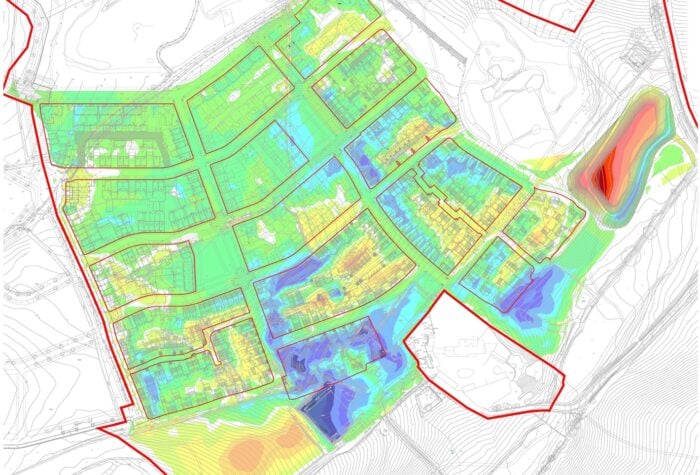
UK Housing Market Update – April 2025

UK Housing Market Update – April 2025: April brought a mixed picture for the UK housing market, reflecting both positive momentum in some areas and persistent structural challenges in others. From house price trends to construction sector performance and regulatory hurdles, here’s a comprehensive round-up of the month’s key developments.
House Price Growth Holds Steady
The UK housing market continued to show resilience in March, with Nationwide reporting stable annual house price growth of 3.9%, unchanged from February. The average property was valued at £271,316, with semi-detached homes seeing the strongest annual rise at 4.8%.
Similarly, ONS figures showed annual house price inflation increased to 5.4% in February, with average house prices at £268,000 – £13,000 higher than the year before. Northern Ireland led the way with 9.0% annual growth.
However, Halifax recorded a -0.5% drop in average house prices in March, bringing the average down to £296,699. Despite the dip, annual growth held firm at 2.8%, with Northern Ireland again the strongest performer at 6.6%, followed by Scotland and Wales.

Trading and Developer Activity
Barratt Redrow, in its first trading update post-merger, reported a “solid” performance with 3,717 home completions in the quarter. The group noted strong weekly private reservations and ongoing consolidation, with nine divisional offices being closed.
Persimmon also enjoyed a good start to the year, with net private sales per outlet per week – excluding bulk sales – up by 3% to 0.65 during the period from 1 January to 27 April.
Meanwhile, Taylor Wimpey remains on course to deliver 10,400 to 10,800 homes in 2025 amidst a “resilient” market.
In a trading statement, the firm said its net private sales rate for the year to 27 April was 0.77, with a cancellation rate of 16%. Total order book value stood at £2.3bn, representing 8,153 homes.
In contrast, Travis Perkins posted a dramatic 99% drop in profits, citing a £77m pre-tax loss for 2024 and falling revenues. Leadership instability remains a concern, with the CEO stepping down after just six months.

Construction Sector Shows Signs of Recovery
The S&P Global UK Construction PMI showed slight improvement in March, rising to 46.4 from 44.6 in February. While still below the growth threshold of 50, residential activity saw a notable lift – from 39.3 to 44.7 – helped by easing borrowing costs.
Official ONS data confirmed that overall construction output returned to growth in February with a 0.4% rise, driven mainly by public sector projects, even as private housing output fell by -0.4%.
Further ONS data revealed that UK housing starts have lagged behind completions for the sixth successive quarter.
Around 32,000 homes began construction in the last quarter of 2024, compared to just over 49,000 completed during the same period.
Regulatory and Policy Developments
The Building Safety Regulator revealed that 75% of ‘Gateway 2’ applications for high-rise residential buildings are still being rejected, primarily due to incomplete submissions and lack of industry design expertise. A shortage of regulatory staff is also contributing to delays.
Meanwhile, the Housing Ombudsman highlighted continued failures in landlord-resident communication, particularly around complaints relating to damp and mould. The need for tailored, clear, and timely engagement remains a key focus under Awaab’s Law.

Sustainability and Planning Challenges
A year on from the introduction of Biodiversity Net Gain (BNG) requirements, a report from the Home Builders Federation found that 98% of SMEs still face challenges with implementation. Common issues include planning delays and a lack of ecological expertise within local authorities.
To support green development, Homes England and Octopus Real Estate launched the second phase of the Greener Homes Alliance, committing £150m to sustainable SME housing projects. Discounts on loan rates will be offered based on meeting new sustainability criteria.

In today’s fast-moving housing market, staying ahead requires more than just insight – it demands strategic support and agile thinking. Whether you’re an existing client or exploring new opportunities, we’re here to help you navigate the complexities with confidence. Get in touch to discover how our planning, design, and delivery teams can provide the clarity, creativity, and expertise needed to bring your projects to life.
Check Out Our Services...
Civil Engineering Group

Cost & Commercial Group
Infrastructure/Abnormal/Site-Wide Cost Planning. We have vast experience in structuring, maintaining and managing budgets of hundreds of million pounds, en...
View More
Development Management Group
We are one of the UK's leading partners to blue chip developers, funders and land promoters. From securing planning consents for major house building schem...
View More

Land, Development and Communities Group
Our Land, Development and Communities Group (LDC) has built an enviable reputation across our industry as leading providers of a variety of services with t...
View More

Mechanical and Electrical Engineering Group
Our Mechanical and Electrical Engineering Group has a renowned team of award-winning, energy-centric building services specialists.
We are a creative te...
View More

Structural Engineering Group
Our Structural Engineering Group can trace its origins back to its formation in 1984. From the outset it quickly gained a reputation for producing practica...
View More
More News
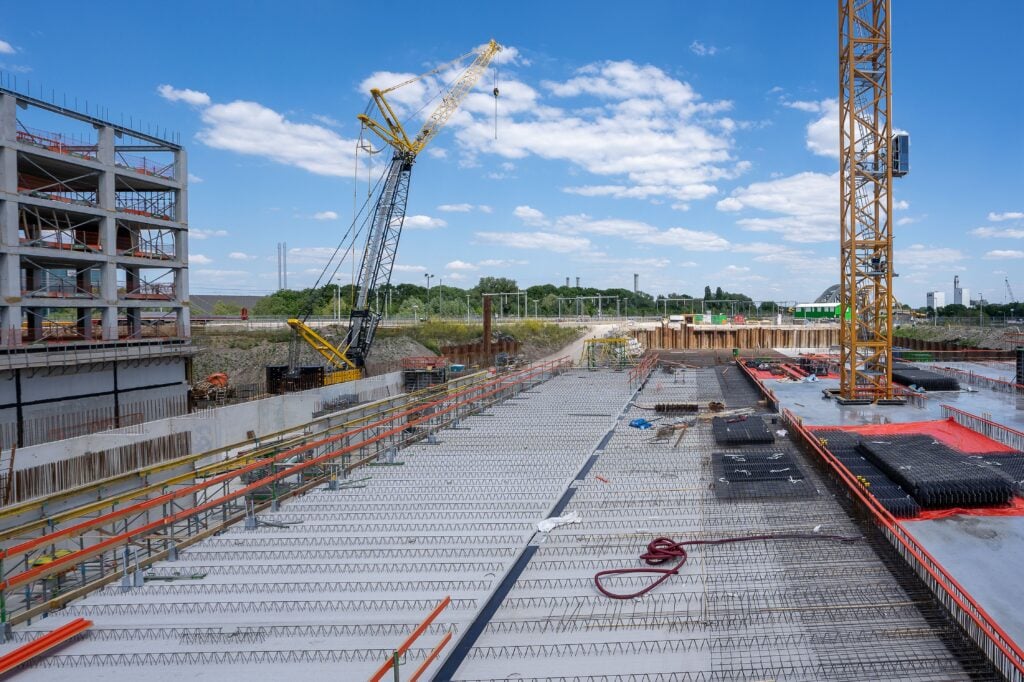
Podcast #18: Design of Transfer slabs and efficient structures
June 2, 2026
As development sites become more constrained and expectations around multi-use building designs continue to rise, structural engineering choices are playing an increasingly important role in successful delivery. In our latest podcast, “Design of Transfer slabs and efficient structures,” Ben is joined by Chris Vivian and Devi Varatharajan to explore current industry trends in concrete design. The discussion focuses on how transfer slabs impact construction efficiency, carbon footprints, and why early-stage engagement is critical to optimizing building design.

Delivering Education Infrastructure: Direct Delivery or Section 106 Contributions?
May 22, 2026
Education facilities play a vital role in shaping successful residential communities. Alongside providing essential school places for growing populations, they help create well-connected neighbourhoods, support long-term community wellbeing and contribute positively to placemaking outcomes. For developers bringing forward significant housing schemes, deciding how education infrastructure obligations should be delivered is rarely straightforward. In most cases, this involves either directly delivering a new education facility as part of the development, or making a financial contribution through a Section 106 Agreement to support provision elsewhere. Each approach carries implications for cost, programme, planning strategy and the long-term success of the development.

Podcast Episode #17: Moving Places, Managing Noise
May 20, 2026
As development sites become more constrained and expectations around placemaking continue to rise, the interaction between transport planning and acoustics is playing an increasingly important role in successful design. In our latest podcast, “Moving Places, Managing Noise,” Ben Wakling is joined by Melanie A’Lee and Tom Quaife-Jones to explore how these two disciplines come together in practice. The discussion focuses on how early coordination between transport and noise specialists can improve scheme viability, reduce planning risk and ultimately create better places to live.