UK Housing Market Update – June 2025
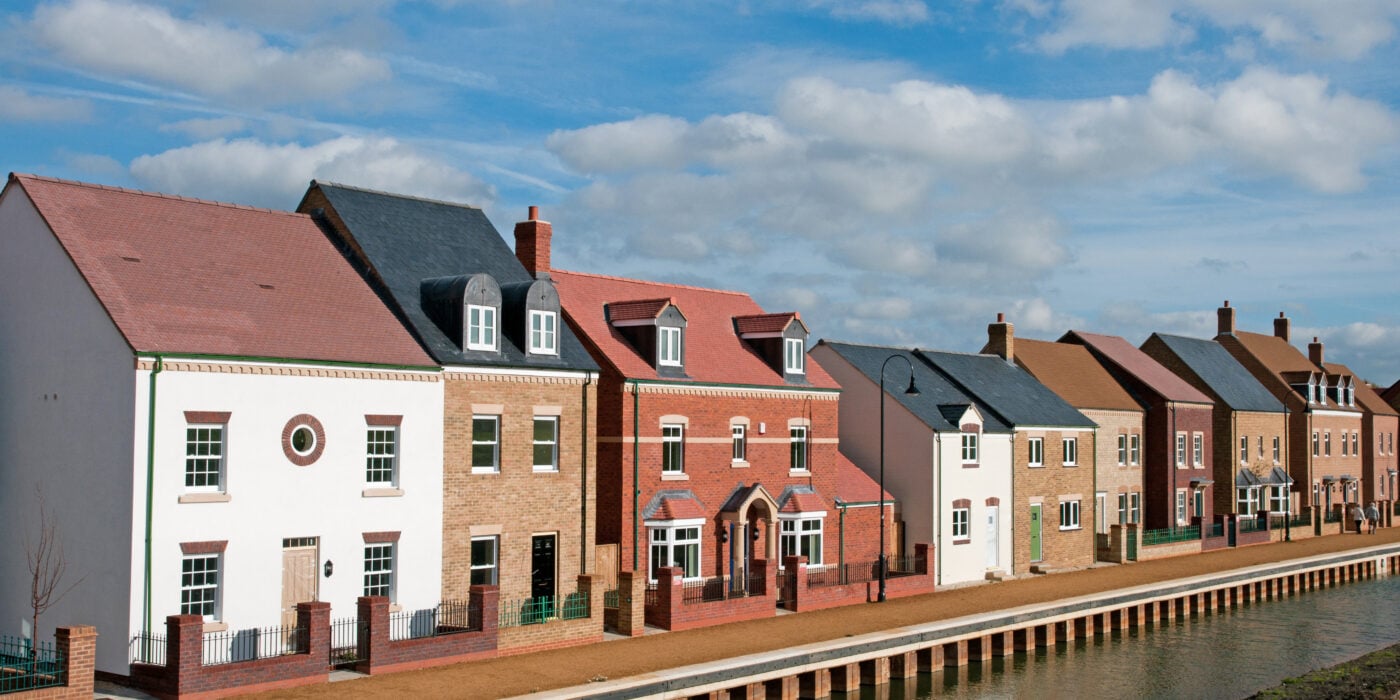
June saw the UK housing market balancing cautious optimism with structural challenges. Government pledges of record social and affordable housing funding, a new National Housing Bank, and planning system reforms offer hope against long-term undersupply. However, planning permissions have hit record lows, Section 106 delays persist, and housebuilders face margin pressures.
Government policy boosts:
The Chancellor’s Spending Review unveiled a £39bn commitment for affordable and social housing over the next decade, the largest in 50 years, with an additional £10bn for financial investments via Homes England. This has been widely welcomed by the sector, with the National Housing Federation noting it will “kickstart a generational boost” in social home delivery.
The Government also launched a National Housing Bank under Homes England, aiming to unlock £53bn of private investment to deliver over 500,000 new homes while supporting the Affordable Homes Programme. Alongside, a new AI tool, Extract, was launched to digitise planning records in minutes, aiming to speed up the planning process.
The MHCLG also announced a streamlined planning appeals process, encouraging “submit once, submit right” to accelerate decisions, while the Construction Skills Mission Board launched initiatives to recruit 100,000 extra construction workers annually, supported by £625m in new skills funding.

Market resilience despite affordability pressures
The housing market remained resilient, though affordability pressures persist:
- Halifax reported a -0.4% monthly fall with annual growth slowing to 2.5%, while Nationwide saw a 0.5% rise, with annual growth at 3.5%.
- The average property price is now £296,648 (Halifax) and £273,427 (Nationwide).
- Rightmove’s June index reported a -0.3% dip in asking prices, reflecting sellers adjusting expectations amid competitive conditions.
- ONS data for April showed a -2.7% monthly fall with annual prices up 3.5% to £265,000.
Affordability remains stretched, with first-time buyers now borrowing on 31-year mortgage terms to manage higher rates, and rural areas continue to outpace urban price growth.
Construction output and industry performance
The S&P Global UK Construction PMI reported a slowing decline in May (47.9), but housebuilding remained the weakest segment (45.1). ONS data showed construction output rose 0.9% in April, the third consecutive month of growth, driven by infrastructure and commercial sectors.
In the industry:
- Crest Nicholson returned to profit (£9.4m pre-tax for H1), while Bellway reported strong spring demand with up to 8,700 completions expected this year.
- Gleeson Homes issued a profit warning (15-20% below expectations) due to flat prices and rising build costs.
- The Competition and Markets Authority extended its investigation into anti-competitive practices by seven major developers.

Check out our services...
Civil Engineering Group

Cost & Commercial Group
Infrastructure/Abnormal/Site-Wide Cost Planning. We have vast experience in structuring, maintaining and managing budgets of hundreds of million pounds, en...
View More
Development Management Group
We are one of the UK's leading partners to blue chip developers, funders and land promoters. From securing planning consents for major house building schem...
View More

Land, Development and Communities Group
Our Land, Development and Communities Group (LDC) has built an enviable reputation across our industry as leading providers of a variety of services with t...
View More

Mechanical and Electrical Engineering Group
Our Mechanical and Electrical Engineering Group has a renowned team of award-winning, energy-centric building services specialists.
We are a creative te...
View More

Our work on the Development Cycle
Our services are available for specific stages of a project or for a projects' entire lifecycle – it all comes down to what you need and when. We are adapt...
View More

Structural Engineering Group
Our Structural Engineering Group can trace its origins back to its formation in 1984. From the outset it quickly gained a reputation for producing practica...
View More
More News

Why Foundation Strategy is a key for Infrastructure Delivery
April 3, 2026
Ground conditions remain one of the biggest sources of cost, carbon and programme risk in infrastructure delivery, yet foundation strategy is still too often considered too late. When layouts and levels are fixed before the ground is understood, projects lose the chance to shape efficient, predictable outcomes. This article explores why early, ground‑led design matters and how treating foundation strategy as a front‑end decision can unlock clarity, reduce risk and improve overall project performance.
Podcast Episode #14: The Housing Crisis, How Did We Get Here?
April 2, 2026
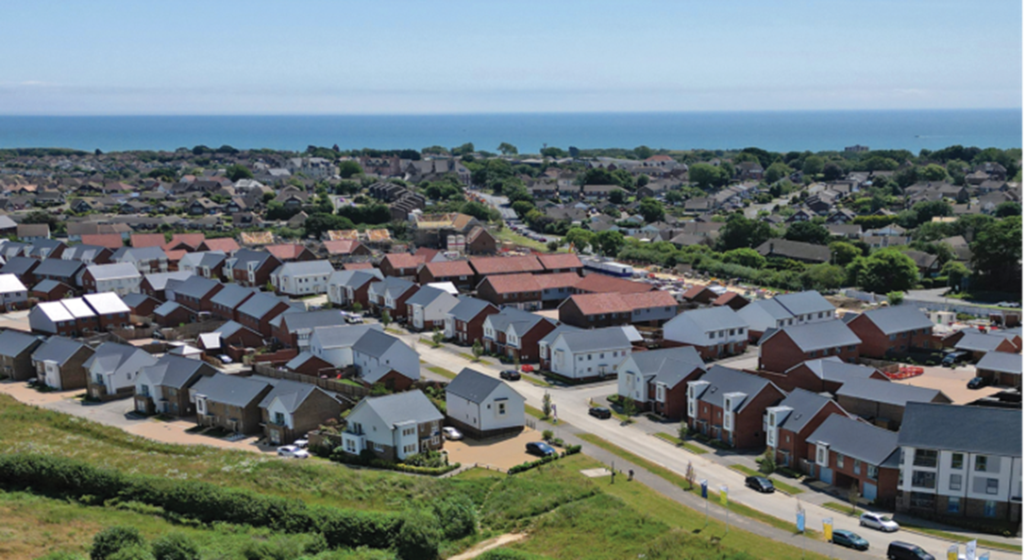
Explore how decades of UK housing policy, supply constraints, planning and affordability pressures created today’s housing crisis, and what lessons the past offers for future delivery.

Our March 2026 Newsletter
March 31, 2026
Welcome to our March 2026 newsletter. In this issue, we’ll tell you more about how we help SMEs prioritise what matters, avoid the common financial traps, and get projects moving, backed by our experienced team who have real housebuilding experience. We’re looking back on our March webinar, where Jack Kenny and Paul Rushmer gave an overview of how to optimise mechanical and electrical designs specifically for high-risk buildings. Plus, we’ll highlight this month’s podcasts! The first explored where structural engineering and building services design overlap, and why good coordination is so important to project delivery. In episode two, Hannah Simpson, Fran Walker, and Isabelle Latuszka spoke about their early-career experiences and how diverse backgrounds add real value to projects. Below, you’ll also get to hear about some exciting awards news and an event we’re co-hosting with the LPDF in Manchester.