Skip to content

The civil engineering profession stands at a critical inflection point, shaped by profound technological disruptions, climate imperatives, and evolving workforce dynamics. Brookbanks' considers how the discipline is transforming amid these changes, highlighting the revolutionary impact of artificial intelligence and digital tools, and the pressing need for greater workforce diversity and inclusion.

As we navigate these shifts, civil engineers must adapt their skills, mindsets, and working practices to remain at the forefront of building resilient communities for future generations.

Current Landscape and Challenges in Civil Engineering Work

The civil engineering profession faces significant workforce challenges that threaten its sustainability and effectiveness. Recent 2024 survey data reveals concerning levels of turnover and burnout across the sector, with engineers citing increasing project complexities, tightening deadlines, and growing regulatory burdens as key stressors. The traditional culture of long hours and rigid office-based work has become increasingly misaligned with contemporary expectations of work-life balance.

Many firms struggle to attract new talent due to perceptions of civil engineering as less dynamic than other STEM fields like software development or renewable energy. This recruitment challenge is compounded by insufficient early exposure to engineering concepts in primary and secondary education, limiting the pipeline of potential engineers, particularly from underrepresented backgrounds.

Workforce Burnout

High turnover rates and increasing reports of professional burnout signal a need for systemic workplace reforms in civil engineering practices.

Work Model Inflexibility

Traditional on-site requirements and rigid schedules limiting attraction of diverse talent and creating retention challenges.

Limited Talent Pipeline

Insufficient early STEM exposure in schools creating a narrower recruitment pool and limiting diversity in the profession.

Research indicates that mentoring programmes and diverse teams not only improve retention but also enhance project outcomes through broader perspectives and innovative problem-solving. Forward-thinking firms are exploring hybrid work models that balance essential on-site presence with remote flexibility for design and analysis tasks.


Detailed image of a black pencil resting on architectural blueprints, ideal for design and planning themes.

Technological Innovations Reshaping Civil Engineering Work

These technologies are not merely enhancing existing processes but fundamentally transforming how infrastructure is conceived, designed, built, and maintained. The most successful engineering firms are those investing in both the tools and the training needed to harness these innovations effectively.

Artificial Intelligence

Machine learning algorithms are revolutionising engineering analysis, enabling rapid iteration of design alternatives and optimising material usage.

Digital Twins

Virtual replicas of physical infrastructure allow engineers to monitor asset performance in real-time, predict maintenance needs, and simulate responses to extreme events. This technology is transforming lifecycle management of bridges, tunnels, and water systems.

Automated Construction

Robotics and 3D printing are creating safer, more efficient construction methods. Autonomous equipment can work in hazardous conditions while additive manufacturing reduces material waste and enables complex geometries previously impossible to build.

Extended Reality

VR and AR technologies allow stakeholders to experience designs before construction begins, improving client communication and public engagement. These tools also provide immersive training environments for engineers to practice complex procedures safely.

The changing role of civil engineers in the digital era

As automation and AI increasingly handle routine analytical tasks, civil engineers are evolving into technology managers and systems integrators as well as engineers. This transformation requires a fundamental shift in skill priorities, with data literacy and technology oversight becoming as crucial as traditional engineering knowledge.

The proliferation of AI-generated designs and algorithmic optimisation, demands engineers who can critically evaluate machine inputs, outputs, understand their limitations, and ensure ethical considerations are properly addressed. This oversight role requires both technical acumen and professional judgment that machines cannot replicate.

From calculation Specialists

Engineers historically focused on manual calculations, drafting, and direct supervision of construction activities.

To Technology Managers

Modern engineers increasingly manage digital tools, validate machine generated solutions, and integrate multidisciplinary systems.

To Systems Integrators

Future engineers will orchestrate complex networks of automated systems, focusing on ethical oversight, creative problem-solving, and stakeholder engagement.

Building a Diverse, Inclusive, and Engaged Civil Engineering Workforce

Creating a more representative civil engineering profession requires systemic changes across education, recruitment, and workplace culture. Research consistently demonstrates that diverse teams produce more innovative solutions to complex infrastructure challenges, yet the sector remains one of the least diverse STEM fields in terms of gender, ethnicity, and socioeconomic background.

Mentoring Programmes

Structured mentoring initiatives that pair experienced engineers with early-career professionals have shown remarkable success in improving retention rates, particularly for underrepresented groups. These relationships provide both technical guidance and navigation through workplace dynamics.

Narrative Transformation

Reframing civil engineering as a profession focused on community impact and sustainability rather than purely technical challenges helps attract candidates with diverse motivations and backgrounds who might otherwise not consider the field.

Early Exposure Initiatives

Industry programmes like Engineers Week and Future World Vision are creating pathways for young people to discover civil engineering through hands-on experiences that demonstrate its relevance to solving pressing societal challenges.

Addressing generational differences has become increasingly important as five distinct generations now work alongside each other in many engineering firms. Creating inclusive environments where traditionalist approaches and innovative thinking are equally valued requires deliberate leadership and transparent communication frameworks.

Preparing for a Future-Ready Civil Engineering Profession

The future of work in civil engineering will be defined by those who can successfully navigate the intersection of technological advancement, environmental imperatives, and human-centred design. Brookbanks believes that the profession must evolve beyond its traditional boundaries to embrace new tools and methodologies while preserving the core ethics and judgment that differentiate engineering from purely technical disciplines

Our civil engineers are positioning themselves as pivotal agents in shaping smarter, greener, and more equitable communities. This requires not only technical expertise but also the ability to communicate effectively with diverse stakeholders and integrate multidisciplinary perspectives into holistic solutions.

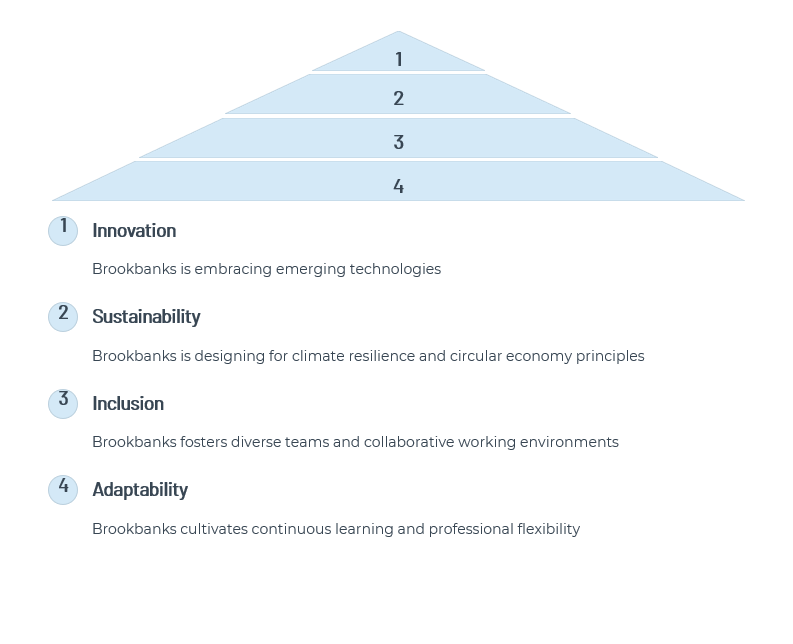
Innovation

Brookbanks is embracing emerging technologies

Sustainability

Brookbanks is designing for climate resilience and circular economy principles

Inclusion

Brookbanks fosters diverse teams and collaborative working environments

Adaptability

Brookbanks cultivates continuous learning and professional flexibility

Meet the Civils Team...

Project Consultant Engineer

Cheuk Yin Liu (Jacky)

Read Profile
Principal Engineer

Christian McArdle

Read Profile
Civil Engineering Associate

Phillip Baker

Read Profile
Richard Moorcroft, Group Technical Director at Brookbanks
Group Technical Director

Richard Moorcroft

Read Profile
Ryan Meade, Head of Civil Engineering at Brookbanks
Group Civil Engineering Director

Ryan Meade

Read Profile
Siobhan McGlynn, Principal Engineer at Brookbanks
Principal Engineer

Siobhán McGlynn

Read Profile
Siobhan Murphy, Technical Director at Brookbanks
Technical Director

Siobhan Murphy

Read Profile
Tom Mitchell, Technical Director at Brookbanks
Technical Director

Tom Mitchell

Read Profile

More News

View of a busy construction site with cranes and building structure under clear sky.

Podcast #18: Design of Transfer slabs and efficient structures

June 2, 2026

As development sites become more constrained and expectations around multi-use building designs continue to rise, structural engineering choices are playing an increasingly important role in successful delivery. In our latest podcast, “Design of Transfer slabs and efficient structures,” Ben is joined by Chris Vivian and Devi Varatharajan to explore current industry trends in concrete design. The discussion focuses on how transfer slabs impact construction efficiency, carbon footprints, and why early-stage engagement is critical to optimizing building design.

Read More
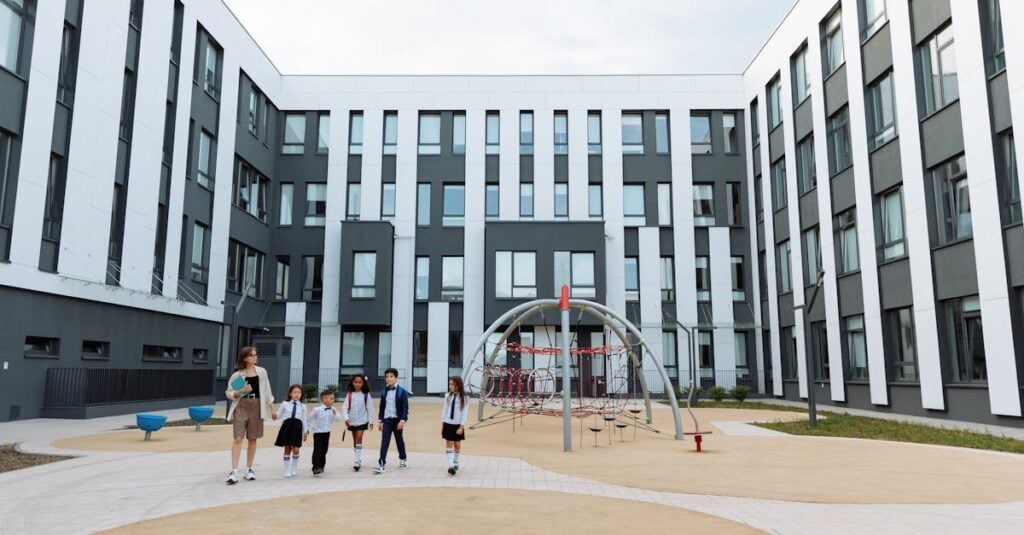
Group of students and teacher walking in a school courtyard with modern architecture and playground.

Delivering Education Infrastructure: Direct Delivery or Section 106 Contributions?

May 22, 2026

Education facilities play a vital role in shaping successful residential communities. Alongside providing essential school places for growing populations, they help create well-connected neighbourhoods, support long-term community wellbeing and contribute positively to placemaking outcomes. For developers bringing forward significant housing schemes, deciding how education infrastructure obligations should be delivered is rarely straightforward. In most cases, this involves either directly delivering a new education facility as part of the development, or making a financial contribution through a Section 106 Agreement to support provision elsewhere. Each approach carries implications for cost, programme, planning strategy and the long-term success of the development.

Read More
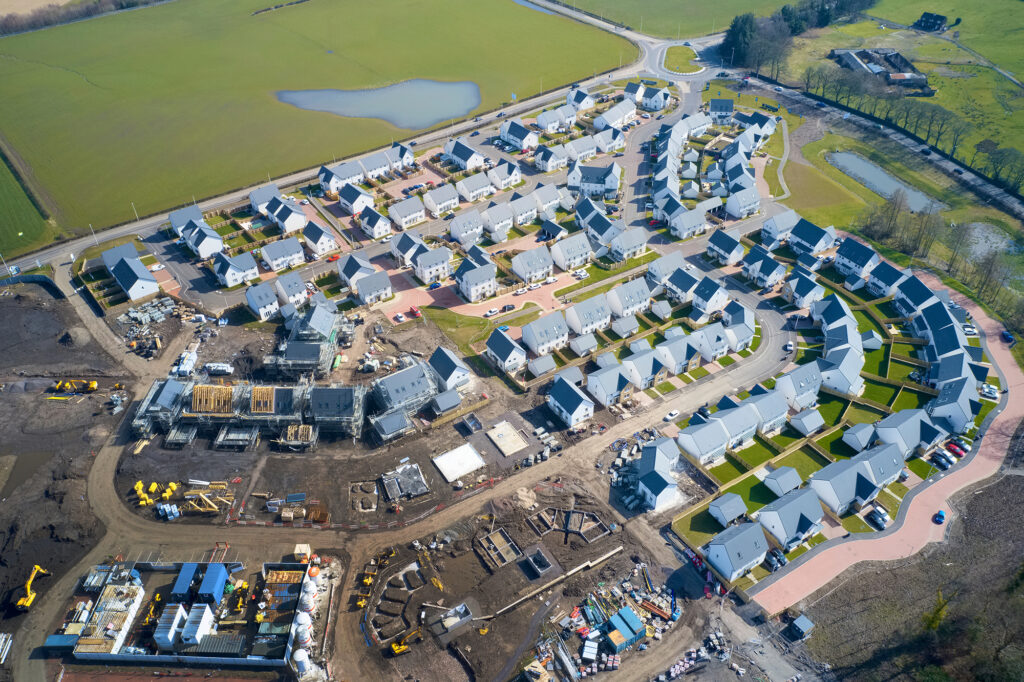
Aerial view of various vehicles driving on asphalt road near typical residential houses in suburban district on sunny day

Podcast Episode #17: Moving Places, Managing Noise

May 20, 2026

As development sites become more constrained and expectations around placemaking continue to rise, the interaction between transport planning and acoustics is playing an increasingly important role in successful design. In our latest podcast, “Moving Places, Managing Noise,” Ben Wakling is joined by Melanie A’Lee and Tom Quaife-Jones to explore how these two disciplines come together in practice. The discussion focuses on how early coordination between transport and noise specialists can improve scheme viability, reduce planning risk and ultimately create better places to live.

Read More