

Skip to content

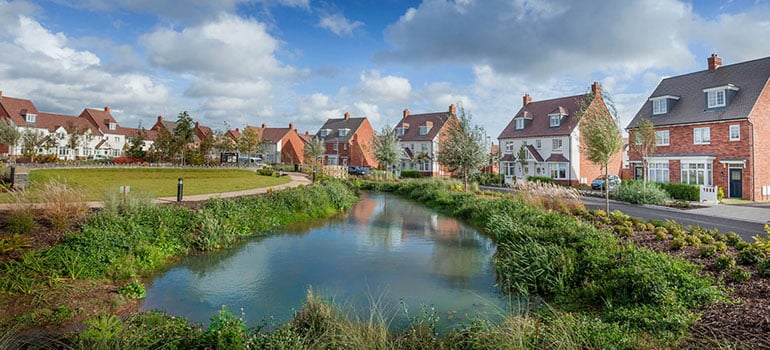
Brookbanks are delighted to have assisted with the delivery of a Constructed Treatment Wetland Mitigation Solution in response to Nutrient Neutrality Guidance.

Brookbanks are delighted to have assisted with the delivery of a Constructed Treatment Wetland Mitigation Solution to ensure proposals exceed nutrient neutrality requirements at a proposed development site in Yeovil, Somerset last month.
The development of 252 dwellings had previously been caught up in the nutrient neutrality issue and was unable to proceed until a mitigation strategy was agreed with Natural England. In response, Brookbanks delivered a full Nutrient Neutrality Assessment and Mitigation Strategy (NNAMS) for the scheme, inclusive of a Wetland Assessment and Framework Review which was approved by NE with a high certainty of delivering a surplus of nutrient credits for our client to be used on this and future schemes.
We are proud to have delivered one of the first approved wetland proposals for nutrient mitigation in the country.

Please contact team leader, Dean Swann, to find out how our team can help deliver nutrient neutrality to your development.

Principal Consultant - Hydrology

Alejandro Marcotegui

Read Profile
Dean Swann, Group Technical Director at Brookbanks
Technical Director, Land, Development and Communities Group

Dean Swann

Read Profile
Graduate Environmental Engineer

Paige Fellows

Read Profile
Siobhan McGlynn, Principal Engineer at Brookbanks
Principal Engineer

Siobhán McGlynn

Read Profile

More News

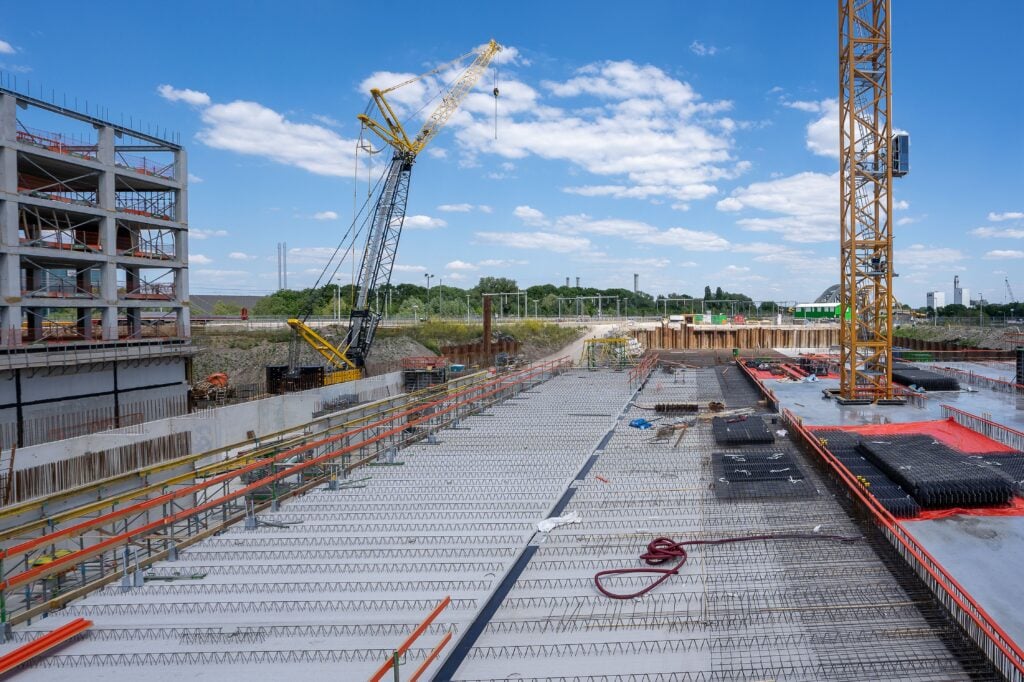
View of a busy construction site with cranes and building structure under clear sky.

Podcast #18: Design of Transfer slabs and efficient structures

June 2, 2026

As development sites become more constrained and expectations around multi-use building designs continue to rise, structural engineering choices are playing an increasingly important role in successful delivery. In our latest podcast, “Design of Transfer slabs and efficient structures,” Ben is joined by Chris Vivian and Devi Varatharajan to explore current industry trends in concrete design. The discussion focuses on how transfer slabs impact construction efficiency, carbon footprints, and why early-stage engagement is critical to optimizing building design.


Read More
Group of students and teacher walking in a school courtyard with modern architecture and playground.

Delivering Education Infrastructure: Direct Delivery or Section 106 Contributions?

May 22, 2026

Education facilities play a vital role in shaping successful residential communities. Alongside providing essential school places for growing populations, they help create well-connected neighbourhoods, support long-term community wellbeing and contribute positively to placemaking outcomes. For developers bringing forward significant housing schemes, deciding how education infrastructure obligations should be delivered is rarely straightforward. In most cases, this involves either directly delivering a new education facility as part of the development, or making a financial contribution through a Section 106 Agreement to support provision elsewhere. Each approach carries implications for cost, programme, planning strategy and the long-term success of the development.

Read More
Aerial view of various vehicles driving on asphalt road near typical residential houses in suburban district on sunny day

Podcast Episode #17: Moving Places, Managing Noise

May 20, 2026

As development sites become more constrained and expectations around placemaking continue to rise, the interaction between transport planning and acoustics is playing an increasingly important role in successful design. In our latest podcast, “Moving Places, Managing Noise,” Ben Wakling is joined by Melanie A’Lee and Tom Quaife-Jones to explore how these two disciplines come together in practice. The discussion focuses on how early coordination between transport and noise specialists can improve scheme viability, reduce planning risk and ultimately create better places to live.

Read More