SME developers: the challenges they face, and how we can help

In the ever-evolving landscape of UK housing delivery, small and medium-sized housebuilders (SMEs) are increasingly recognised as a vital part of the Government’s ambition to build 1.5 million new homes over the course of this Parliament. Their agility, local knowledge and design-led approach bring much-needed diversity to the market.
However, despite their potential, SMEs continue to face disproportionate challenges when bringing housing developments forward.
At Brookbanks, we work closely with SME developers across the country. We see first-hand the barriers they face, and the opportunities that exist when those barriers are removed.
The planning paradox
In May 2025 the Government announced a range of reforms designed to speed up delivery of homes on smaller sites across the country, with eased Biodiversity Net Gain (BNG) requirements, more land and financing options for SMEs, and a new ‘medium site’ category which will face simpler rules and fewer costs[1].
This is welcome news: for many SMEs the planning system remains complex, inconsistent and under-resourced. The most recent State of Play survey by the Home Builders Federation found that over half of SMEs waited over a year to obtain planning permission, and 56% reported a 30% uplift in the cost of obtaining planning permission[2].
At Brookbanks, our Land, Development and Communities team work with SMEs to identify opportunities, shape planning strategies, and manage applications. We help navigate local policy, engage with stakeholders, and secure permissions which are deliverable and commercially viable.
[1] Government backs SME builders to get Britain building – GOV.UK
[2] HBF Report – State of Play: Challenges and opportunities facing SME home builders

Unlocking land
Access to land remains a fundamental challenge for SMEs, with the same State of Play survey revealing that 47% of respondents cite land availability as a major barrier to development. SMEs frequently find themselves priced out of the market by larger developers, or unable to compete for sites that require significant remediation or infrastructure investment.
Similarly, even when land is secured, viability remains a concern. Rising build costs, onerous planning obligations and regulatory requirements can quickly erode margins. And whilst funding options have improved, many SMEs still struggle to access the finance they need to get schemes off the ground.
At Brookbanks we provide early-stage technical assessments, from flood risk to drainage, to utilities and ground conditions, so SMEs can make informed decisions before committing to land deals. Our environmental specialists help manage ecological constraints, BNG, and sustainability requirements in a proportionate and cost-effective way.
Skills and capacity constraints
Many SME housebuilders operate with lean teams, often juggling multiple roles across development, finance, and delivery. This can limit their ability to respond quickly to planning queries, manage technical consultants, or keep pace with evolving regulations. The industry-wide skills shortage – particularly in planning, engineering, and environmental disciplines – only compounds the issue.
We provide a wide range of clients with programme and project management, balancing consultants, contractors and planning conditions to help keep projects moving and reduce risk.
How else can we help?
The services we provide to SMEs cover all of these challenges, and more. We can support with feasibility assessments, cost planning, procurement, and contract management. We help ensure that schemes are viable, fundable, and delivered on budget; providing the financial rigour that lenders and investors expect.
For small sites with infrastructure challenges, our engineering team offers pragmatic solutions. Whether it’s unlocking access, managing utilities, or designing cost-efficient drainage strategies, we help SMEs overcome technical barriers that might otherwise stall development.
Get in touch today to discover how we can support you, and unlock your housing delivery.

Who To Contact...

Head of Cost and Commercial
Ben Wakeling
Read Profile
Group Director for Structural Engineering
Chris Vivian
Read Profile
Group Director for Land, Development and Communities
Lee Witts
Read Profile
Director, Mechanical and Electrical Engineering Group
Lucy Wildesmith
Read Profile
Group Technical Director
Richard Moorcroft
Read Profile
Group Director for Development Management / Head of Yorkshire and North East Office
Tori Hall
Read ProfileCheck out our Services...
Civil Engineering Group

Cost & Commercial Group
Infrastructure/Abnormal/Site-Wide Cost Planning. We have vast experience in structuring, maintaining and managing budgets of hundreds of million pounds, en...
View More
Development Management Group
We are one of the UK's leading partners to blue chip developers, funders and land promoters. From securing planning consents for major house building schem...
View More

Land, Development and Communities Group
Our Land, Development and Communities Group (LDC) has built an enviable reputation across our industry as leading providers of a variety of services with t...
View More

Mechanical and Electrical Engineering Group
Our Mechanical and Electrical Engineering Group has a renowned team of award-winning, energy-centric building services specialists.
We are a creative te...
View More

Our work on the Development Cycle
Our services are available for specific stages of a project or for a projects' entire lifecycle – it all comes down to what you need and when. We are adapt...
View More

Structural Engineering Group
Our Structural Engineering Group can trace its origins back to its formation in 1984. From the outset it quickly gained a reputation for producing practica...
View More
More News
Why Foundation Strategy is a key for Infrastructure Delivery
April 3, 2026
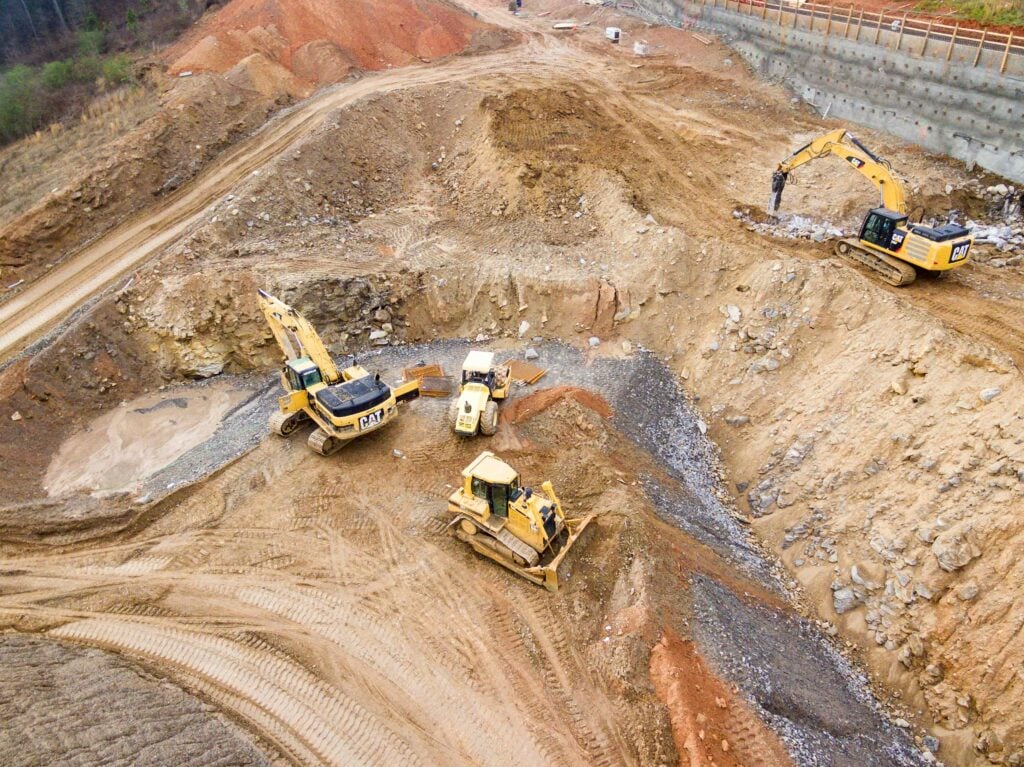
Ground conditions remain one of the biggest sources of cost, carbon and programme risk in infrastructure delivery, yet foundation strategy is still too often considered too late. When layouts and levels are fixed before the ground is understood, projects lose the chance to shape efficient, predictable outcomes. This article explores why early, ground‑led design matters and how treating foundation strategy as a front‑end decision can unlock clarity, reduce risk and improve overall project performance.

Podcast Episode #14: The Housing Crisis, How Did We Get Here?
April 2, 2026
Explore how decades of UK housing policy, supply constraints, planning and affordability pressures created today’s housing crisis, and what lessons the past offers for future delivery.

Our March 2026 Newsletter
March 31, 2026
Welcome to our March 2026 newsletter. In this issue, we’ll tell you more about how we help SMEs prioritise what matters, avoid the common financial traps, and get projects moving, backed by our experienced team who have real housebuilding experience. We’re looking back on our March webinar, where Jack Kenny and Paul Rushmer gave an overview of how to optimise mechanical and electrical designs specifically for high-risk buildings. Plus, we’ll highlight this month’s podcasts! The first explored where structural engineering and building services design overlap, and why good coordination is so important to project delivery. In episode two, Hannah Simpson, Fran Walker, and Isabelle Latuszka spoke about their early-career experiences and how diverse backgrounds add real value to projects. Below, you’ll also get to hear about some exciting awards news and an event we’re co-hosting with the LPDF in Manchester.