Your First Home (or “Help to Buy”) is back
What does it mean for housing delivery?
The Government’s announcement of the new Your First Home scheme has understandably attracted attention for its potential to help first-time buyers onto the property ladder. However, the most significant impact of the policy may lie elsewhere. The bigger question for the development industry is whether it can restore confidence across the housing delivery pipeline and provide a stimulus for new housing supply at a time when viability pressures continue to constrain development activity.
The scheme is expected to allow eligible first-time buyers to purchase a new-build home with a deposit of just 2.5%, supported by a government-backed equity loan of up to 20%. While the detail is yet to emerge, the underlying objective is clear: to increase demand for new-build housing and improve access to home ownership. That matters because, despite the numerous challenges currently facing the sector, housing delivery ultimately depends on confidence. Developers, investors and landowners need certainty that there will be sufficient demand when homes are delivered if they are to commit capital to bringing sites forward today.
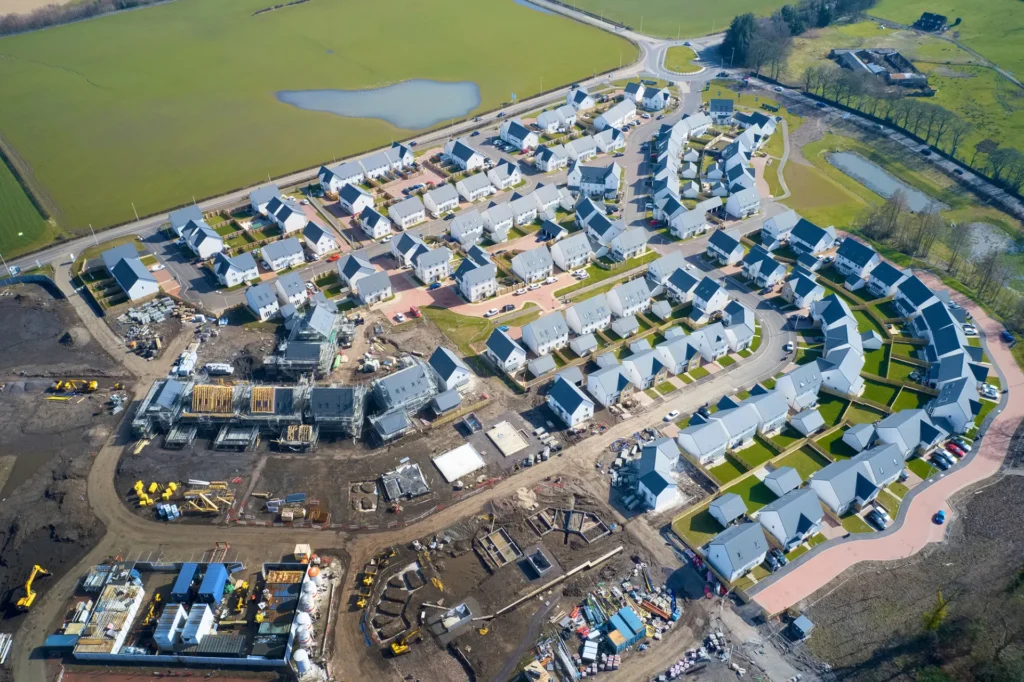
The relationship between demand and delivery is often overlooked in broader discussions around housing policy. Housebuilding is a long-term process, with decisions on land acquisition, planning, infrastructure, design and construction frequently made several years before a home is occupied. When confidence in future sales rates weakens, investment decisions become harder to justify, site progression slows and housing delivery inevitably suffers. Conversely, where demand is strong and predictable, developers are better able to invest with confidence, creating a positive cycle that supports the wider development and construction sector.
Viewed through that lens, the significance of the Your First Home scheme is not simply its potential to assist individual buyers. Its greater value may be in providing confidence to the market. If more first-time buyers are able to access new-build homes, developers may have greater certainty around sales absorption rates, development appraisals and the commercial viability of bringing forward new sites. In an environment where many schemes continue to be challenged by rising costs and constrained margins, even a modest improvement in market confidence could have a meaningful effect on housing delivery.
Importantly, any increase in housing delivery has implications far beyond housebuilders themselves. Every site that progresses generates demand for infrastructure, engineering and technical delivery. Roads, drainage systems, utilities, earthworks and sustainable drainage infrastructure all need to be designed, approved and delivered before homes can be occupied. As development activity increases, so too does the importance of ensuring these enabling works are planned efficiently and delivered in a way that supports project viability.
This is where the conversation around housing policy and infrastructure becomes closely aligned. Government interventions aimed at stimulating demand can only achieve their objectives if the wider development process is capable of responding. Planning systems need to function effectively, infrastructure capacity needs to be available, and projects need to remain commercially viable despite increasing regulatory and environmental requirements. The challenge is therefore not simply generating demand, but ensuring the industry can convert that demand into deliverable homes and sustainable communities.
At Brookbanks, we believe Your First Home should be viewed not only as a route into home ownership, but as a potential catalyst for housing delivery. Moving forward, understanding how increased buyer demand will translate into sales confidence, infrastructure investment and scheme viability will make a notable difference to how developers plan, fund and deliver new homes and sustainable communities.